
Dual Diagnosis Treatment in Los Angeles, CA
What is Dual Diagnosis?
Dual diagnosis refers to the presence of both a mental health disorder and a substance use disorder occurring at the same time. Also known as co-occurring disorders, this condition involves two separate diagnoses that interact and influence one another.
Mental health disorders such as depression, anxiety, and other conditions can contribute to or worsen substance use, while drug or alcohol dependence can intensify existing mental health struggles. Without proper treatment, this cycle can continue, with one condition fueling the other. Effective care for dual diagnosis requires an integrated approach that addresses both mental health and substance use simultaneously.
Understanding Dual Diagnosis: Mental Illness and Substance Abuse
Dual diagnosis treatment addresses the complex connection between mental illness and substance abuse. Conditions such as bipolar disorder, anxiety, or depression often overlap with alcohol or drug use, creating a cycle that requires specialized care. At Purposes Recovery, we integrate mental health and addiction services, ensuring that both challenges are treated together rather than in isolation.
Why Integrated Treatment Matters
An integrated treatment approach combines therapy, medication management, and holistic care to create a cohesive recovery plan. By addressing psychiatric disorders, substance use, and underlying psychiatric symptoms, clients experience improved outcomes and a higher quality of life.
Evidence-Based Interventions
Our clinicians use proven methods like Motivational Interviewing and Psychosocial Interventions to encourage lasting change. These therapies help clients identify personal goals, overcome resistance to treatment, and develop healthier coping skills.
Practice Guidelines for Lasting Recovery
We follow national practice guidelines and clinical standards to ensure every client receives high-quality, effective care. From screening and assessment to individualized therapy, our dual diagnosis program meets the unique needs of each person we serve.
What Are Symptoms of Dual Diagnosis
Since dual diagnosis involves both a substance use disorder and a mental health condition, symptoms can vary depending on the specific combination of disorders. Each condition has its own set of challenges, and when they occur together, they can intensify one another.
- Withdrawing from family and friends
- Struggling to concentrate or stay focused
- Sudden shifts in mood or behavior
- Engaging in reckless or risky activities
- Developing a high tolerance or experiencing withdrawal symptoms
- Feeling dependent on substances to function daily
- Intense mood swings or emotional instability
- Difficulty thinking clearly or staying focused
- Struggling with responsibilities at work or school
- Avoiding social interactions or isolating from others
- Feelings of hopelessness or thoughts of self-harm
Because symptoms can overlap, professional evaluation is essential for identifying and treating both conditions effectively. Addressing one disorder without treating the other may lead to relapse or worsening symptoms, making integrated care a critical part of recovery.
Which Comes First in a Dual Diagnosis?
Determining whether a mental health disorder or substance use disorder developed first can be challenging, as they often influence each other. While these conditions frequently occur together, one does not necessarily cause the other. However, substance use can intensify the symptoms of mental health conditions, making them more difficult to manage. At the same time, individuals struggling with depression, anxiety, or other mental health concerns may turn to drugs or alcohol as a way to cope, increasing the risk of developing a substance use disorder. Regardless of which came first, treating both conditions simultaneously is essential for effective recovery.
What is Dual Diagnosis Treatment?
Dual diagnosis treatment is a comprehensive approach designed to address both a substance use disorder and a co-occurring mental health condition simultaneously. Since these disorders interact and can intensify one another, treating only one while ignoring the other often leads to relapse or worsening symptoms. Effective dual diagnosis care integrates medical, psychological, and behavioral therapies to ensure both conditions are properly managed. Treatment may include medical detox, medication management, individual and group therapy, and specialized programs for relapse prevention. Many programs incorporate evidence-based approaches such as cognitive-behavioral therapy (CBT), dialectical behavior therapy (DBT), and holistic therapies to support long-term recovery. By addressing both disorders together, dual diagnosis treatment provides individuals with the tools and support needed to achieve lasting stability and improved mental well-being.
Reducing the Risk of Dual Diagnosis
While mental health disorders and substance use disorders cannot always be prevented, certain steps can help lower the risk of developing both conditions. Understanding personal risk factors and making informed choices can play a crucial role in prevention. Strategies to reduce risk include:
- Knowing Your Family History – Being aware of any genetic predisposition to mental health or substance use disorders can help you take proactive steps toward prevention.
- Practicing Moderation – Limiting alcohol consumption and avoiding drug use can reduce the likelihood of developing dependency or worsening mental health symptoms.
- Seeking Professional Guidance – Talking to a healthcare provider about any mental health concerns can lead to early intervention and support before substance use becomes a coping mechanism.
Find Dual Diagnosis Treatment Near You in Los Angeles
Looking for support that understands both your mental health and addiction challenges? You’re not alone—and help is closer than you think. At Purposes Recovery in Los Angeles, our dual diagnosis program offers integrated care for conditions like depression, anxiety, PTSD, bipolar disorder, and substance abuse—all under one roof.
Whether you’re in Hollywood, West LA, or the San Fernando Valley, our location is easy to access and ready to support your recovery journey.
Visit Us:
Purposes Recovery
7239 Kentwood Ave, Los Angeles, CA 90045
What Conditions Are Treated in Dual Diagnosis Programs?
Dual diagnosis treatment is built for people facing both mental health conditions and substance use disorders. At Purposes Recovery, we provide integrated support for a wide range of co-occurring diagnoses, including:
- Depression and alcohol use
- PTSD and opioid dependence
- Bipolar disorder and stimulant use
- Anxiety and prescription drug misuse
- OCD and marijuana dependence
- Schizophrenia and methamphetamine use
These combinations are more common than you might think—and with the right care, they’re highly treatable. We focus on the full picture of your health to build a plan that actually works.
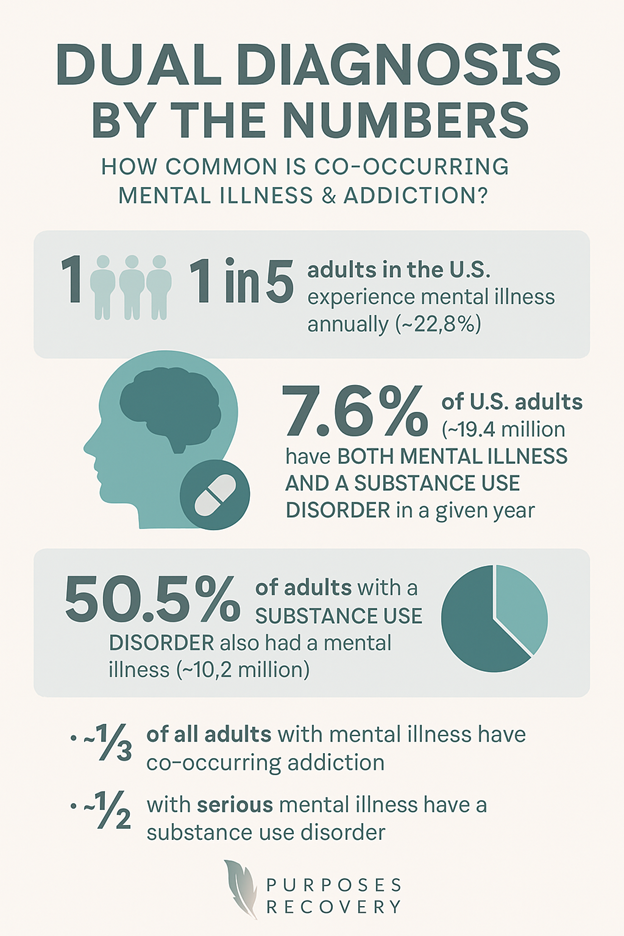
The Overlap Is Real: Dual Diagnosis by the Numbers
17 million U.S. adults had both a substance use disorder and a mental illness in 2020.
National Alliance on Mental Illness. “Substance Use Disorders & Mental Illness Statistics.” NAMI, https://www.nami.org/about-mental-illness/common-with-mental-illness/substance-use-disorders/.
People with mental illness are twice as likely to develop a substance use disorder.
National Academies of Sciences, Engineering, and Medicine. Clinical Practice Guideline for the Treatment of Substance Use Disorders. In: Treatments for Substance Use Disorder. Washington (DC): National Academies Press (US); 2020. Available from: https://www.ncbi.nlm.nih.gov/books/NBK571451/
Among adults with serious mental illness, 1 in 4 also struggles with substance abuse.
Substance Abuse and Mental Health Services Administration (SAMHSA), What is Mental Health? — Conditions – Co‑Occurring Disorders, SAMHSA.gov. Retrieved from https://www.samhsa.gov/mental-health/what-is-mental-health/conditions/co-occurring-disorders
Integrated treatment improves long-term outcomes and reduces relapse rates by up to 25%.
Ramey, F. R. (2024). Improving engagement in residential treatment for mental health and substance use disorder to improve retention rates. The Journal for Nurse Practitioners, S1555‑4155(24)00250‑2. https://www.npjournal.org/article/S1555-4155(24)00250-2/abstract
Will My Insurance Cover This?
In most cases, yes. Insurance providers often cover dual diagnosis treatment—including therapy, detox, and psychiatric care—especially when both mental health and substance use are involved.
Purposes Recovery accepts most major plans and will help you check your benefits quickly and confidentially.
Call (888) 555-1234 or verify your insurance here to get started.
Ready to Feel Like Yourself Again?
You don’t have to keep managing everything on your own. If you’re facing both mental health struggles and substance use, we see you—and we’re here to help.
At Purposes Recovery, we treat the full picture of who you are, not just the symptoms. With the right support, real healing is possible.
Call us at (888) 555-1234 or reach out online to take your next step toward recovery.
You’re not broken. You’re just ready for change—and we’ll walk with you every step of the way.