
Even if you’ve been through treatment before, the details can get blurry—especially when people toss around terms like “detox” and “rehab” as if they mean the same thing.
At our alcohol detox center in Los Angeles, we see it all the time: someone says treatment “didn’t work,” but when we dig into it, what they actually tried was just one part of the process.
Understanding the difference between detox and rehab isn’t about technical jargon or splitting hairs. It’s about knowing what kind of help you actually got last time, and what was missing.
If you left treatment feeling like nothing had changed, you might not have gone through the full continuum of care.
Detox: Clearing the Substance from Your System
Detox is the short-term, medically supervised phase where your body adjusts to being without alcohol or drugs.
- Primary goal: Get you physically stable.
- Typical length: A few days to a week (sometimes longer for certain substances or health conditions).
- Focus: Withdrawal management and safety.
- Setting: A secure, medical environment with 24/7 monitoring.
In detox, your body is recalibrating. You may experience withdrawal symptoms like shakes, sweating, nausea, anxiety, or trouble sleeping. Medical staff can offer medication, monitoring, and reassurance to keep you safe.
Think of detox like repairing a flat tire. You can’t go far until it’s done, but it’s not the whole road trip.
What detox is not:
It’s not therapy. It’s not long-term coping skills. It’s not deep emotional work. Once the alcohol is out of your system, you may feel physically better, but the patterns, triggers, and root causes are still there.
Rehab: Rebuilding the Foundation
Rehab comes after detox. This is where the real emotional and behavioral work begins.
- Primary goal: Equip you with tools for lasting recovery.
- Typical length: 30, 60, or 90 days (sometimes longer).
- Focus: Therapy, skill-building, relapse prevention, mental health support.
- Setting: Residential or outpatient programs, structured daily schedules.
In rehab, you work on the “why” behind the drinking. You’ll learn to manage cravings, handle stress without alcohol, and build a daily routine that supports recovery.
Skipping rehab after detox is like washing a wound but never stitching it up. You feel relief for a moment, but the deeper issue is still exposed.
Why People Confuse the Two
From the outside, both detox and rehab can look like “going to treatment.” Friends and family may even say, “They went to rehab” when they actually mean detox.
For someone going through it, the confusion can run deeper:
- If your first and only experience was detox, you might have expected total life change from what was really just the first step.
- If you went through rehab but were still in withdrawal, you might have been too physically drained to engage in therapy.
Both situations can leave you skeptical about treatment as a whole—because you didn’t actually get the complete picture.
Why Both Steps Matter
Detox without rehab leaves you physically stable but mentally unprepared.
Rehab without detox can be unsafe if you’re still experiencing withdrawal symptoms.
For parents trying to understand what medical detox means for your child, it’s important to recognize that detox addresses the immediate physical effects of substance use while creating a safer foundation for the therapeutic work that follows.
The two work together as a continuum:
- Detox protects your body.
- Rehab strengthens your mind.
When both are in place, you’re addressing addiction on every level—physical, mental, and emotional.
The Los Angeles Factor
In a city as busy and unpredictable as Los Angeles, both detox and rehab offer something you can’t get when you’re trying to quit on your own: space.
Detox gives you a short, contained window away from triggers—whether that’s the bar on the corner, the friend group that always drinks, or the everyday stressors of work and traffic.
Rehab gives you longer-term breathing room to practice living differently before you step back into the chaos. It’s a chance to rehearse the new version of your life in a safe environment.
If You’ve Tried Before and It Didn’t Work
It’s not about trying “harder.”
It’s about matching the right kind of care to what’s actually missing.
If you’ve only done detox, adding rehab could change the equation.
If you’ve done rehab but skipped proper detox, your body may have been working against you from the start.
Neither step is a magic cure—but together, they give you a much stronger shot at lasting change.
Mini Comparison: Detox vs. Rehab
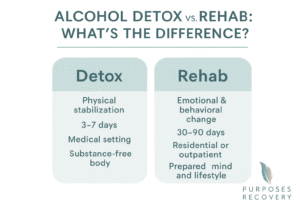
| Feature | Detox | Rehab |
|---|---|---|
| Primary Goal | Physical stabilization | Emotional and behavioral change |
| Length | 3–7 days (on average) | 30–90 days (or more) |
| Focus | Withdrawal safety, medical care | Therapy, coping skills, relapse prevention |
| Location | Medical unit or detox facility | Residential or outpatient program |
| Outcome | Substance-free body | Prepared mind and lifestyle |
FAQs: Detox vs. Rehab
1. Can I just do detox and skip rehab?
You can, but it’s risky. Detox clears your body of alcohol, but it doesn’t address the reasons you drink. Without rehab, most people return to old patterns quickly.
2. Is detox always required before rehab?
If you’re physically dependent on alcohol or drugs, yes. Going straight into rehab without detox can make therapy ineffective or unsafe because of withdrawal symptoms.
3. How long will I be in detox?
It depends on the substance, your health, and your history of use. Most alcohol detox stays are 3–7 days.
4. What’s the difference between inpatient rehab and outpatient rehab?
Inpatient rehab means you live at the facility for the duration of treatment. Outpatient rehab means you live at home but attend scheduled sessions several times a week.
5. What if I’ve been to rehab before and relapsed?
That doesn’t mean rehab “didn’t work.” It may mean the program wasn’t the right fit, the timing wasn’t right, or you didn’t have enough aftercare support. Relapse is common and doesn’t erase the progress you made.
Call (888)482-0717 or visit our alcohol detox center in Los Angeles, CA to learn more about how both detox and rehab can work together for lasting recovery.