
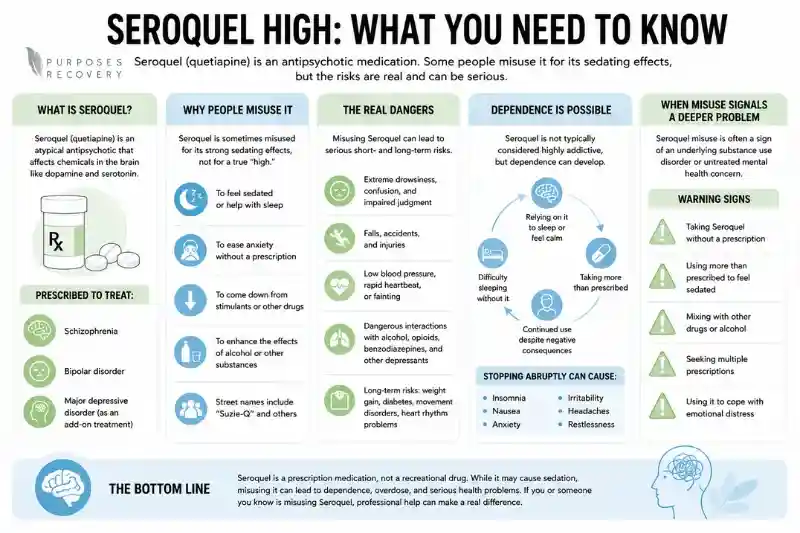
People searching for a Seroquel high are often looking for a simple answer: can this medication produce a recreational buzz? The honest answer is that while some people misuse Seroquel (quetiapine) because of its strong sedating effects, it is not considered a recreational drug in the way opioids, stimulants, or benzodiazepines often are.
That doesn’t mean it’s safe to misuse.
Taking Seroquel without a prescription, using larger doses than prescribed, or combining it with alcohol or other drugs can lead to serious medical complications. In many cases, Seroquel misuse is less about chasing euphoria and more about trying to force sleep, intensify the effects of other substances, or manage withdrawal symptoms. Those patterns can signal a deeper substance use disorder that deserves professional attention.
What Seroquel (Quetiapine) Is—and What It Is Prescribed For
Seroquel is the brand name for quetiapine, an atypical antipsychotic medication. It changes how certain neurotransmitters, including dopamine and serotonin, function in the brain.
Healthcare providers prescribe Seroquel to treat conditions such as:
- Schizophrenia
- Bipolar disorder
- Major depressive disorder (as an add-on treatment in some cases)
One of Seroquel’s most noticeable side effects is drowsiness. That sedating effect can be beneficial for people taking it exactly as prescribed, especially when symptoms make sleep difficult. However, the same effect is one reason the medication is sometimes misused.
Unlike drugs designed to produce intense pleasure or stimulation, Seroquel does not reliably create feelings of euphoria. Instead, higher doses often produce overwhelming fatigue, slowed thinking, dizziness, and impaired coordination.
Why People Misuse Seroquel (the Sedation Effect, Street Names, Who Uses It)
The term “Seroquel high” can be misleading because many people who misuse the medication are not actually seeking a pleasurable high.
Instead, people may misuse Seroquel to:
- Feel heavily sedated
- Help themselves sleep
- Reduce anxiety without a prescription
- Ease the “comedown” from stimulant drugs
- Enhance or modify the effects of alcohol or other substances
On the street, Seroquel has sometimes been referred to as “Suzie-Q” or similar slang names. Reports of diversion and nonmedical use have occurred in correctional facilities, among people with polysubstance use disorders, and among individuals attempting to self-medicate untreated mental health symptoms.
While the sedation may seem appealing to some, increasing the dose rarely creates a stronger recreational experience. Instead, it often increases the likelihood of dangerous side effects.
The Real Dangers of Misusing an Antipsychotic
Misusing an antipsychotic medication affects far more than alertness.
Potential risks include:
- Extreme drowsiness and difficulty staying awake
- Poor judgment and slowed reaction time
- Falls and accidents
- Low blood pressure that can cause fainting
- Rapid heartbeat
- Confusion or disorientation
- Problems with coordination
- Overdose, particularly when combined with alcohol, opioids, or other sedating drugs
Repeated misuse may also increase the risk of movement disorders, metabolic complications such as weight gain and blood sugar changes, and heart rhythm abnormalities in susceptible individuals.
One of the greatest dangers comes from combining Seroquel with other central nervous system depressants. Alcohol, opioids, sleeping medications, and benzodiazepines can amplify sedation, increasing the risk of respiratory depression, overdose, and other life-threatening complications.
Can You Become Dependent on Seroquel?
Seroquel is generally not considered as addictive as opioids, methamphetamine, or benzodiazepines because it does not consistently activate the brain’s reward system in the same way.
However, that does not mean dependence cannot develop.
Some people begin relying on Seroquel to fall asleep or feel calm. Over time, they may feel unable to sleep without it or begin taking larger amounts than prescribed. Others misuse it alongside different substances as part of a broader pattern of addiction.
People who stop taking Seroquel abruptly after prolonged misuse may experience withdrawal-like symptoms, including:
- Insomnia
- Nausea
- Anxiety
- Irritability
- Headaches
- Restlessness
Anyone considering stopping Seroquel should speak with their prescribing clinician rather than discontinuing it suddenly.
When Seroquel Misuse Points to a Deeper Problem
For many people, Seroquel misuse is not the primary issue. Instead, it may be one piece of a larger pattern involving alcohol, opioids, stimulants, or other prescription medications.
Warning signs include:
- Taking Seroquel without a prescription
- Using more than prescribed to feel sedated
- Mixing it with other drugs to change their effects
- Seeking multiple prescriptions
- Using medication to cope with emotional distress instead of following medical guidance
These behaviors often indicate that substance use has become difficult to control.
If you or someone you care about is misusing prescription medications, early intervention can reduce the risk of overdose, worsening mental health symptoms, and long-term health complications. Professional prescription drug addiction treatment can help address both the substance use itself and the underlying reasons someone began misusing medications in the first place.
Recovery is not simply about stopping a drug. It’s about understanding what the drug was being used for, treating co-occurring mental health concerns when they exist, and building healthier ways to manage stress, sleep, and emotional pain.
Frequently Asked Questions
Can you get high on Seroquel?
Seroquel can cause heavy sedation, but it typically does not produce the euphoric high associated with many recreational drugs. Most people who misuse it experience extreme drowsiness rather than pleasurable effects, while also increasing their risk of serious medical complications.
Is Seroquel addictive?
Seroquel has a lower addiction potential than many commonly misused prescription medications. However, people can develop psychological dependence or begin misusing it regularly, especially alongside other substances or to manage sleep and anxiety without medical supervision.
What are the dangers of misusing Seroquel?
Misusing Seroquel can cause excessive sedation, impaired judgment, falls, cardiovascular effects, overdose risk, and dangerous interactions with alcohol, opioids, benzodiazepines, and other depressants. Repeated misuse may also signal an underlying substance use disorder that should be professionally evaluated.