
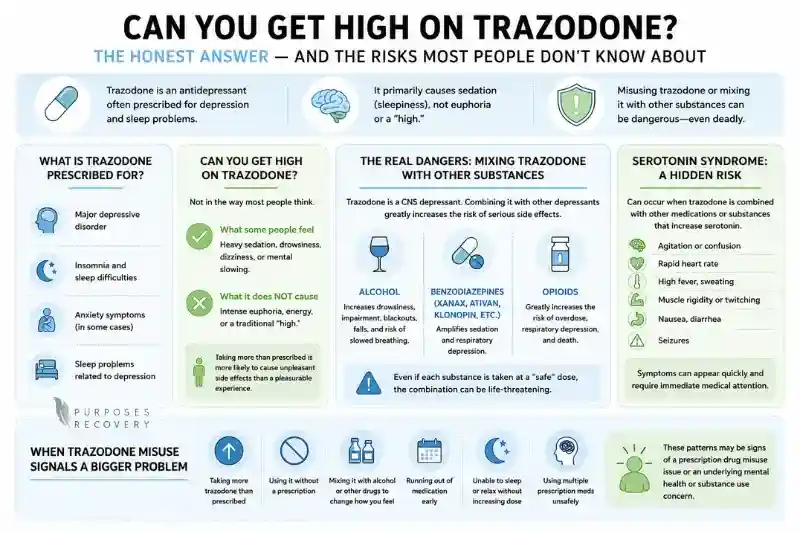
If you’ve searched for a trazodone high, you’re probably looking for a straight answer, not scare tactics.
Here’s the reality: trazodone is not known for producing a strong recreational high. Most people who misuse it experience heavy sedation, dizziness, or confusion rather than the euphoric effects associated with drugs that are commonly abused.
That doesn’t mean it’s harmless.
People sometimes misuse trazodone by taking larger doses than prescribed or combining it with alcohol, opioids, benzodiazepines, or other substances. Those combinations can slow breathing, impair judgment, and increase the risk of life-threatening complications. In some cases, mixing trazodone with medications that affect serotonin can also lead to serotonin syndrome, a medical emergency many people have never heard of.
Understanding the difference between a limited recreational appeal and genuine medical risk can help you make safer decisions and recognize when prescription drug misuse may be becoming a larger problem.
What Trazodone Is and What It Is Prescribed For
Trazodone is an antidepressant that’s been available for decades. It belongs to a class of medications called serotonin antagonist and reuptake inhibitors (SARIs), which work by affecting serotonin levels in the brain.
Although it was originally approved to treat depression, today it’s commonly prescribed “off-label” to help people with insomnia because one of its most noticeable effects is drowsiness.
Healthcare providers may prescribe trazodone for:
- Major depressive disorder
- Sleep difficulties or chronic insomnia
- Anxiety symptoms in some cases
- Sleep problems related to depression
When taken exactly as prescribed, trazodone can be an effective medication. Like many prescription drugs, however, using it in ways that weren’t intended increases the risk of serious side effects.
Can You Get High on Trazodone?
The honest answer is not in the way most people think of getting high.
Unlike opioids, stimulants, or benzodiazepines, trazodone generally does not produce intense euphoria or a rewarding “rush.” That is one reason it has a relatively low potential for recreational abuse compared with many other prescription medications.
Some people misuse trazodone hoping to experience:
- Extreme relaxation
- Heavy sedation
- Feeling detached or mentally slowed
- Enhanced effects when combined with other substances
In reality, taking large amounts of trazodone is more likely to cause unpleasant symptoms than an enjoyable experience. These may include:
- Severe drowsiness
- Confusion
- Blurred vision
- Dizziness
- Poor coordination
- Nausea
- Low blood pressure
- Fainting
Some individuals may continue misusing trazodone not because it creates a powerful high, but because they’re chasing sleep, trying to intensify the effects of another drug, or attempting to manage withdrawal symptoms without medical guidance.
The Real Dangers: What Happens When You Combine Trazodone with Other Substances
This is where the risk becomes much more serious.
Many medical emergencies involving trazodone happen because it is combined with other central nervous system depressants rather than because of trazodone alone.
Alcohol
Alcohol and trazodone both cause sedation. Together they can significantly increase:
- Excessive drowsiness
- Impaired coordination
- Falls and injuries
- Blackouts
- Slowed breathing
Even moderate drinking can make trazodone’s sedating effects much stronger than expected.
Benzodiazepines
Combining trazodone with medications like Xanax, Ativan, or Klonopin can amplify sedation and respiratory depression. The result may be dangerous impairment, especially at higher doses or in older adults.
Opioids
Mixing trazodone with prescription pain medications or illicit opioids creates an even greater risk. Both drugs suppress the central nervous system, increasing the possibility of:
- Dangerous respiratory depression
- Loss of consciousness
- Overdose
- Death
The danger comes from the combined effects, even if each medication is taken at a dose that might otherwise seem manageable on its own.
Serotonin Syndrome: The Risk Most People Do Not Know About
One of the least understood risks of trazodone misuse is serotonin syndrome.
Serotonin is an important brain chemical involved in mood, sleep, and many other body functions. When too much serotonin builds up, it can overstimulate the nervous system and create a medical emergency.
Serotonin syndrome is most likely to occur when trazodone is combined with other medications or substances that also increase serotonin, including certain antidepressants, migraine medications, some illicit drugs, and supplements like St. John’s wort.
Possible symptoms include:
- Agitation or confusion
- Rapid heart rate
- High fever
- Heavy sweating
- Muscle rigidity or muscle twitching
- Tremors
- Diarrhea
- Seizures
Symptoms can develop quickly and require immediate medical evaluation. Anyone experiencing signs of serotonin syndrome after taking trazodone or combining medications should seek emergency medical care.
When Trazodone Misuse Signals a Bigger Problem
Because trazodone isn’t typically viewed as a “party drug,” repeated misuse can sometimes go unnoticed.
But patterns matter more than the specific medication.
You may be developing a prescription drug problem if you find yourself:
- Taking more trazodone than prescribed
- Using it without a prescription
- Mixing it with alcohol or other drugs to change how you feel
- Running out of medication early
- Feeling unable to sleep or relax without increasing your dose
- Using multiple prescription medications in unsafe combinations
Sometimes trazodone misuse is less about trazodone itself and more about underlying struggles with anxiety, insomnia, depression, or broader substance use. Addressing those underlying issues often leads to better long-term outcomes than simply stopping one medication.
If prescription medications are becoming difficult to control, professional support can help. Purposes Recovery provides prescription drug addiction treatment for individuals struggling with prescription medication misuse, including situations involving multiple substances. While the center is based in Los Angeles, it welcomes admissions from many states.
Frequently Asked Questions
Can you get high on trazodone?
Not in the same way as drugs commonly associated with recreational use. Most people experience sedation rather than euphoria, and taking larger amounts significantly increases the risk of harmful side effects instead of producing a pleasurable high.
Is trazodone addictive?
Trazodone is generally considered to have a lower risk of addiction than opioids or benzodiazepines. However, people can still misuse it, develop unhealthy patterns of use, or combine it with other substances in dangerous ways.
Is it dangerous to mix trazodone with alcohol?
Yes. Alcohol increases trazodone’s sedating effects and can raise the risk of impaired judgment, falls, slowed breathing, overdose, and other serious complications. It’s safest to avoid drinking alcohol while taking trazodone unless your prescribing clinician specifically advises otherwise.
The Bottom Line
The internet often presents two extremes: that trazodone can’t be abused at all or that it’s a highly addictive drug.
Neither tells the whole story.
Trazodone is not known for producing a strong recreational high, but misusing it or combining it with alcohol, opioids, benzodiazepines, or other medications can have serious and sometimes life-threatening consequences. If you’re using trazodone in ways other than prescribed, or you’re concerned about someone who is, it’s worth taking those concerns seriously before a medical emergency develops.
Seeking help early isn’t about labels. It’s about protecting your health and addressing the underlying reasons prescription medications may be starting to feel difficult to control.