
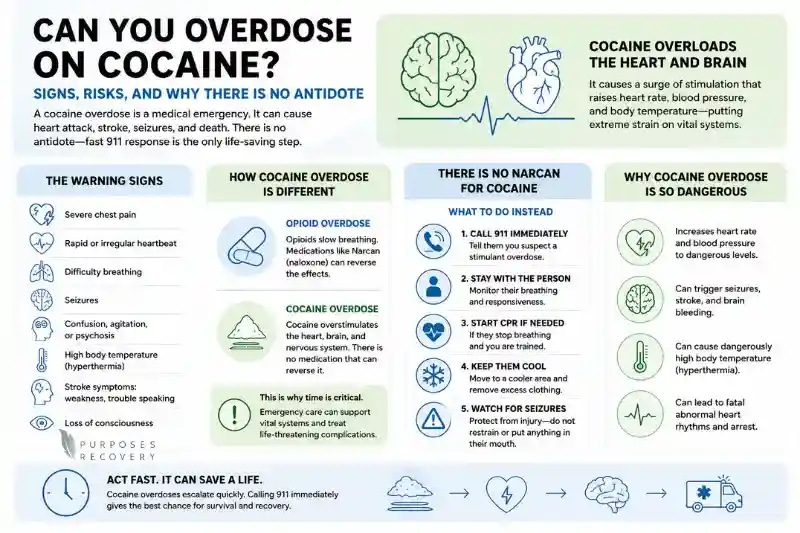
A cocaine overdose is a medical emergency that can become life-threatening within minutes. Unlike opioid overdoses, there is no medication that reverses cocaine’s effects. The danger isn’t that someone simply “passes out.” Cocaine can overwhelm the heart, brain, and body’s ability to regulate temperature, leading to heart attack, stroke, seizures, or sudden cardiac arrest.
If you suspect someone is experiencing a cocaine overdose, don’t wait to see if symptoms improve. Call 911 immediately. Fast emergency medical care is the most important factor in improving the chances of survival.
Yes, You Can Overdose on Cocaine — Here Is What That Looks Like
Many people associate overdose with opioids, but stimulants like cocaine can also cause fatal overdoses. A cocaine overdose happens when the drug overwhelms the body’s cardiovascular and nervous systems, causing dangerous complications that can escalate rapidly.
An overdose can happen after using a large amount of cocaine, but it can also occur after what someone believes is a “normal” amount. Factors that increase the risk include:
- Using highly potent or contaminated cocaine
- Combining cocaine with alcohol or other drugs
- Using cocaine after a period of abstinence, when tolerance has decreased
- Having an underlying heart condition, even if it hasn’t been diagnosed
Because today’s illicit drug supply is unpredictable, it’s impossible to know exactly how strong a dose may be or what substances it contains. That uncertainty increases the risk of overdose for both new and experienced users.
The Warning Signs of a Cocaine Overdose
A cocaine overdose often affects multiple body systems at the same time. Symptoms can worsen quickly, making immediate medical attention critical.
Common warning signs include:
- Severe chest pain
- Difficulty breathing
- Extremely rapid or irregular heartbeat
- Seizures
- Sudden confusion or extreme agitation
- Hallucinations or psychosis
- High body temperature (hyperthermia)
- Loss of consciousness
- Weakness on one side of the body or trouble speaking, which may indicate a stroke
One of the greatest dangers of cocaine is how intensely it stimulates the body. As heart rate, blood pressure, and body temperature continue to rise, the risk of permanent brain injury, heart attack, or cardiac arrest also increases.
Even if someone seems awake and alert between symptoms, they may still be experiencing a life-threatening medical emergency.
Why a Cocaine Overdose Is Different from an Opioid Overdose
People often assume all overdoses are treated the same way, but stimulant overdoses are fundamentally different from opioid overdoses.
Opioids primarily slow the body’s breathing. Medications like naloxone reverse opioid overdoses by blocking opioid receptors and restoring normal breathing.
Cocaine works through an entirely different mechanism.
Instead of slowing the body down, cocaine floods the brain with dopamine while causing intense stimulation throughout the cardiovascular system. Blood vessels constrict, heart rate accelerates, blood pressure rises, and the brain becomes more electrically active. These effects create the conditions for seizures, stroke, heart attack, dangerously high body temperature, and fatal heart rhythm disturbances.
Because cocaine does not act on opioid receptors, medications designed to reverse opioid overdoses cannot stop these effects.
This is why time is so critical. Emergency physicians cannot simply administer a reversal medication. Instead, they must stabilize the person’s heart, breathing, temperature, blood pressure, and neurological function while treating life-threatening complications as they develop.
There Is No Narcan for Cocaine — What to Do Instead
One of the most dangerous misconceptions about stimulant overdoses is believing that naloxone can reverse a cocaine overdose.
It cannot.
If you believe someone is overdosing on cocaine:
- Call 911 immediately.
- Tell emergency dispatch that you suspect a stimulant overdose.
- Stay with the person until help arrives.
- If they lose consciousness and stop breathing, begin CPR if you’re trained to do so.
- If they are having a seizure, move nearby objects away to reduce the risk of injury, but do not try to hold them down or place anything in their mouth.
- If possible, keep them as cool as you safely can by moving them to a cooler environment and removing excess clothing while waiting for emergency responders.
If there is any possibility the cocaine was contaminated with fentanyl or another opioid, administering naloxone may still be appropriate because it can reverse the opioid portion of a mixed overdose. However, naloxone will not treat the effects of cocaine itself. Even if naloxone is given, emergency medical care is still essential.
The safest response is always the same: call 911 immediately. Waiting to see whether symptoms improve can cost valuable time.
Getting Help After a Cocaine Crisis
Surviving a cocaine overdose is often a warning sign that the risks of continued use have become too great to ignore. Even if someone recovers physically, the underlying patterns that contributed to the overdose often remain.
Recovery isn’t just about avoiding another emergency. It’s about addressing the reasons cocaine use has become difficult to control and building the skills, support, and treatment needed for lasting change.
If you or someone you love has experienced a cocaine overdose, professional care can help reduce the risk of another crisis. Learn more about cocaine addiction treatment at Purposes Recovery and explore evidence-based treatment options available for individuals in Los Angeles and those traveling from other states for care.
Frequently Asked Questions
Can you overdose on cocaine?
Yes. A cocaine overdose can cause heart attack, stroke, seizures, dangerously high body temperature, cardiac arrest, and death. It should always be treated as a medical emergency.
What are the signs of a cocaine overdose?
Common signs include severe chest pain, rapid or irregular heartbeat, seizures, confusion, psychosis, difficulty breathing, loss of consciousness, stroke symptoms, and hyperthermia.
What should you do if someone is overdosing on cocaine?
Call 911 immediately. Stay with the person, monitor their breathing, and follow emergency dispatch instructions. If they stop breathing, begin CPR if you are trained. If fentanyl contamination is possible, naloxone may help reverse the opioid component, but it does not reverse cocaine itself. Emergency medical treatment is still required.