
I wasn’t a mess. I wasn’t slurring words at work or sleeping in the back of my car. I wasn’t getting kicked out of bars or cashing unemployment checks. I was “fine.”
I had a job that paid well. A house that looked clean. A calendar filled with meetings, dinners, responsibilities. I made it to my kid’s basketball games. I responded to emails before 9am. I bought good wine and drank it out of good glasses.
But I drank every night. And some mornings. And once, on the drive home.
It wasn’t the DUI that broke me. It wasn’t the envelope with the divorce papers, either. It was the moment I saw myself in the mirror—really saw myself. The quiet wreck behind the eyes. The exhaustion I kept outrunning. The fear I disguised as competence.
That was the moment I finally admitted: this isn’t who I want to be anymore.
And that’s when alcohol addiction treatment stopped being “something for other people” and became the thing that saved my life.
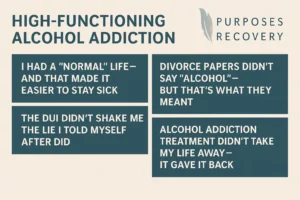
I Had a “Normal” Life—And That Made It Easier to Stay Sick
It’s strange how high-functioning addiction works. The better you are at faking it, the harder it is to ask for help. You convince yourself it’s not that serious. That it’s stress, not sickness. That everyone has their thing.
That’s how I lived for years. Quietly dependent. Highly effective. Completely detached.
I had a morning routine that made me look disciplined. A social circle that made me look connected. A partner who made me look stable. And underneath it all, a cycle that ran my life:
- Wake up, dry mouth, silent dread
- Get through the day, fueled by caffeine and deadlines
- Pour a drink the second the door closed behind me
- Feel “normal” again—until the bottle ran dry or the guilt kicked in
Alcohol wasn’t a party anymore. It was a necessity. A reward. A medicine. A cage.
The DUI Didn’t Shake Me—The Lie I Told Myself After Did
The night I got pulled over, I’d had three drinks at dinner and another one in the car before heading home. I felt “fine.” Confident enough to drive. Confident enough to lie.
When the officer asked how much I’d had, I said two. My hands shook, but my voice was smooth. I had a whole story ready. Calm. Clean. Practiced.
It didn’t work. I failed the breathalyzer. I was booked. And still, as I sat in that holding room, I told myself I didn’t belong there.
“This is a fluke. You’re not like the others.”
But I was. I just wore better shoes.
The Divorce Papers Didn’t Say “Alcohol”—But That’s What They Meant
My marriage had been slipping for years. I blamed work stress. Communication issues. “Growing apart.” But when the envelope came—cold, silent, final—it hit me in the gut.
She never once said, “You drink too much.”
What she said was, “You’re not here.”
She was right. I was home, but not present. I made jokes at dinner but didn’t ask how her day was. I tucked our kid in but scrolled through my phone while doing it. I lived on the surface of everything—especially myself.
When she left, I couldn’t even argue. Because the truth is, I’d been gone for a long time.
I Wasn’t Ready to Stop—Until the Mirror Moment Came
A week after the divorce papers, I looked in the mirror on a random Tuesday night. I was holding a glass of wine in a coffee mug because I didn’t want my kid to see. I hadn’t eaten dinner. My phone had 11 unread texts. I didn’t care.
And for a split second, I saw myself clearly—not as the “functional adult” I played in the world, but as someone who had vanished.
That’s when I whispered it. Quiet but honest: “You’re not okay.”
Alcohol Addiction Treatment Didn’t Take My Life Away—It Gave It Back
I thought going to treatment would be humiliating. Like I was giving up my intelligence, my credibility, my image. But what I gave up was the performance. The exhausting role of “person who has it all together.”
At Purposes Recovery in Los Angeles, I met other high-functioning people who’d hit their own wall. Doctors. Teachers. Business owners. Parents.
No one looked like a stereotype. But every one of us had something in common: we were tired of hiding.
Treatment didn’t strip me of who I was. It helped me find the parts I’d buried under achievement and alcohol. I learned how to feel again. To listen. To rest. To show up without numbing out.
And yeah, it was hard. But it was real. And I was so ready to stop being fake.
High-Functioning Addiction Is Still Addiction
Here’s the myth that keeps people sick: If you’re holding it together, it’s not that bad.
But here’s the truth: if you need a substance to feel normal, if your world revolves around hiding or controlling it, if your joy is muted and your relationships are distant—then yeah, it’s bad enough.
There is no bonus round for suffering silently. No extra credit for holding it in.
You don’t have to hit “bottom” to get help. You just have to stop climbing over your own truth.
You Don’t Have to Be “Broken” to Choose Better
We wait for the crisis. The collapse. The hospital bed. The intervention.
But what if we didn’t?
What if your clarity could come before your collapse?
That’s what alcohol addiction treatment is—it’s the decision to choose something different before everything is destroyed.
And even if you’ve already lost things—your license, your marriage, your spark—it’s not too late.
FAQs: Getting Real About High-Functioning Alcohol Addiction
Can I keep working while in treatment?
Yes. Many programs, including outpatient options at Purposes Recovery, are designed for professionals who need to balance work and recovery.
What if I haven’t told anyone about my drinking?
That’s okay. You don’t need to come in with a diagnosis or a label. Just your truth. We’ll meet you there.
Do I have to stop drinking completely?
If you’re entering treatment, abstinence is typically part of the process. But the decision to commit to it comes with support, not pressure.
What makes treatment different than just cutting back on my own?
Treatment gives you structure, tools, and people who understand. It’s not just about quitting—it’s about rebuilding.
Is alcohol addiction treatment in Los Angeles discreet?
Absolutely. At Purposes Recovery, your privacy and dignity are prioritized from day one. No shame. No exposure. Just support.
Here’s What I Know Now That I Didn’t Then
You can’t outthink addiction. You can’t outperform it. You can’t outrun it with success, charm, or willpower.
But you can outgrow it.
You can reclaim your mornings. Your energy. Your relationships. Your peace.
It starts with one decision: to stop pretending. To start healing. And to finally get honest with yourself.
Call (888) 482-0717 or visit Alcohol Addiction Treatment in Los Angeles, CA to learn more about returning to care. You don’t need to prove anything to anyone anymore. You don’t have to hit a new low to deserve a better life. You’re already worth the change. And we’re ready when you are.