
Early recovery can be the loneliest place on Earth.
You’re doing the hard thing—saying goodbye to substances, old routines, and the version of yourself that came with them. But what nobody tells you is how quiet it gets at first. Especially in a residential treatment program, where the world slows down just enough for you to hear the ache you’ve been avoiding.
If you’re wondering how do people make friends in residential treatment?—you’re not broken for asking that. In fact, it might be one of the most honest and hopeful questions there is.
At Purposes Recovery in Los Angeles, we walk with people every day who feel what you’re feeling. And we’ve seen what can happen when those feelings are met with gentleness, time, and space to connect.
Is It Normal to Feel Lonely in Residential Treatment?
Yes—and it’s more common than most people admit.
Many arrive at treatment feeling emotionally raw, grieving their old life—even if parts of it were harmful. Social ties, routines, even chaos can offer a kind of familiarity that feels hard to let go of. Without that noise, the silence can feel deafening.
You might miss your old friends, even if they weren’t safe. You might feel left out, even in a room full of people. That’s not a sign you don’t belong. It’s a sign your heart is recalibrating.
What Kind of People Make Friends in Treatment?
All kinds. Quiet ones, loud ones, skeptical ones, grieving ones.
There’s no personality type required to connect in treatment. In fact, friendships here often form in surprising ways—between people who, on the outside, might never have crossed paths. What matters more than common interests is shared truth. The kind that happens when someone says, “I didn’t think anyone else felt this way,” and someone else says, “I do.”
How Do Friendships Begin in a Residential Setting?
Usually, they start small. Really small.
- A moment of eye contact in group therapy.
- A seat next to someone at lunch.
- A shared laugh over something weirdly specific.
- A whispered, “Yeah, me too,” during a check-in.
In our residential treatment program, we don’t force connections—but we create space for them to happen. From group sessions to art activities to casual downtime, you’ll find opportunities to interact naturally, even if you’re not ready to talk much at first.
Connection often begins before words are spoken. The simple act of being seen and known—even a little—is where friendship starts.
What If I’m Not Great at Making Friends?
You don’t have to be a social butterfly to find your people.
Some of the most meaningful friendships in treatment are built on presence, not performance. You don’t have to be funny, charming, or talkative. You just have to be willing to stay in the room. To listen. To let your guard down a little at a time.
One client once said, “I didn’t say anything my first week. But someone sat next to me every day anyway. And that meant everything.”
Sometimes, the best friendships begin with silence and a shared cup of coffee.
Can You Trust People in Treatment?
That’s a real question—and an important one.
Trust doesn’t happen instantly, and it shouldn’t. Many people entering treatment have been hurt, abandoned, or let down. At Purposes Recovery, we honor that reality. We believe emotional safety comes first.
While you won’t connect deeply with everyone, you will find that many people are just as eager for real connection as you are. The walls people put up on day one often soften by week two. Vulnerability becomes contagious—in the best way.
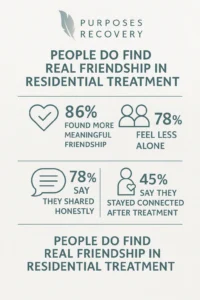
Friendships formed in treatment aren’t just “rehab friends.” They can become lifelong relationships built on honesty, growth, and shared healing.
How Does a Residential Treatment Program Support Connection?
At Purposes Recovery, our residential treatment program is structured to promote natural, meaningful connection—not forced interactions or artificial bonding.
Here’s how:
- Group Therapy – Sharing in group can feel intimidating at first, but it’s often where connection begins. Even if you’re quiet, hearing others name your feelings can create an invisible thread of belonging.
- Shared Living Spaces – Living together offers casual, low-pressure chances to talk, vent, or just sit in shared silence.
- Creative + Recreational Activities – From art and music to hikes and yoga, shared activities foster connection beyond words.
- Trauma-Informed Culture – We train our staff and guide our community to operate from compassion, not correction. Emotional safety makes all the difference.
Why Do Friendships in Treatment Feel So Different?
Because they’re built on something real.
In everyday life, we often make friends based on convenience—neighbors, classmates, coworkers. In treatment, you connect based on truth. You see each other at your most vulnerable. There’s no pretending. That kind of friendship hits deeper.
One client described it like this: “It felt like we met as strangers and left as family. Not because we were the same, but because we stopped hiding.”
What If I Still Feel Lonely?
That doesn’t mean you’re failing.
Loneliness doesn’t disappear overnight, even in a supportive setting. It’s a feeling that ebbs and flows. But you don’t have to sit in it alone.
If you’re in our care, we’ll walk with you—day by day, moment by moment. And if you’re just thinking about entering treatment, we want you to know: There are people here who will get you. Not because they’re perfect, but because they’ve been where you are.
FAQ: Friendship & Connection in Treatment
Can I keep in touch with people after I leave treatment?
Yes, many clients stay connected after treatment—some become lifelong friends. Our alumni program helps maintain those bonds in healthy, structured ways.
What if I’ve been hurt by friendships before?
You’re not alone. We create a safe, structured environment where trust can be rebuilt slowly, at your own pace. There’s no pressure to share until you’re ready.
Do I have to participate in group activities to make friends?
Not at all. While group participation can help, some connections form during quiet moments—like shared meals or evening wind-downs. Everyone connects differently.
What if I open up and get rejected?
That’s a real fear—and one we honor gently. In our program, staff actively support group dynamics to foster respect, listening, and empathy. And when ruptures happen, we work through them together.
Can introverts make friends in treatment?
Absolutely. Many introverts thrive in our program. Connection isn’t about being the loudest in the room—it’s about showing up, being present, and finding people who meet you where you are.
You Don’t Have to Stay Lonely Forever
You don’t have to figure it all out before you take the next step. You don’t need the perfect words or the perfect attitude. You just need a willingness to show up, even a little.
If you’re ready to feel connected, seen, and supported in your recovery journey, we’re here to help.
📞 Call (888)482-0717 or visit to learn more about our residential treatment program services in Los Angeles, CA, Illinois, Indiana, Kansas, New Jersey, New York, Ohio. Let’s start building something real—together.