You saw the signs long before they admitted anything was wrong.
The shift in sleep. The hiding. The way their eyes stopped meeting yours. You didn’t want to believe it, but deep down, you knew: something was slipping again.
Maybe this is the second time. Maybe the third. And maybe the question in your chest isn’t just “how bad is it now?” but how much worse might it get if we wait?
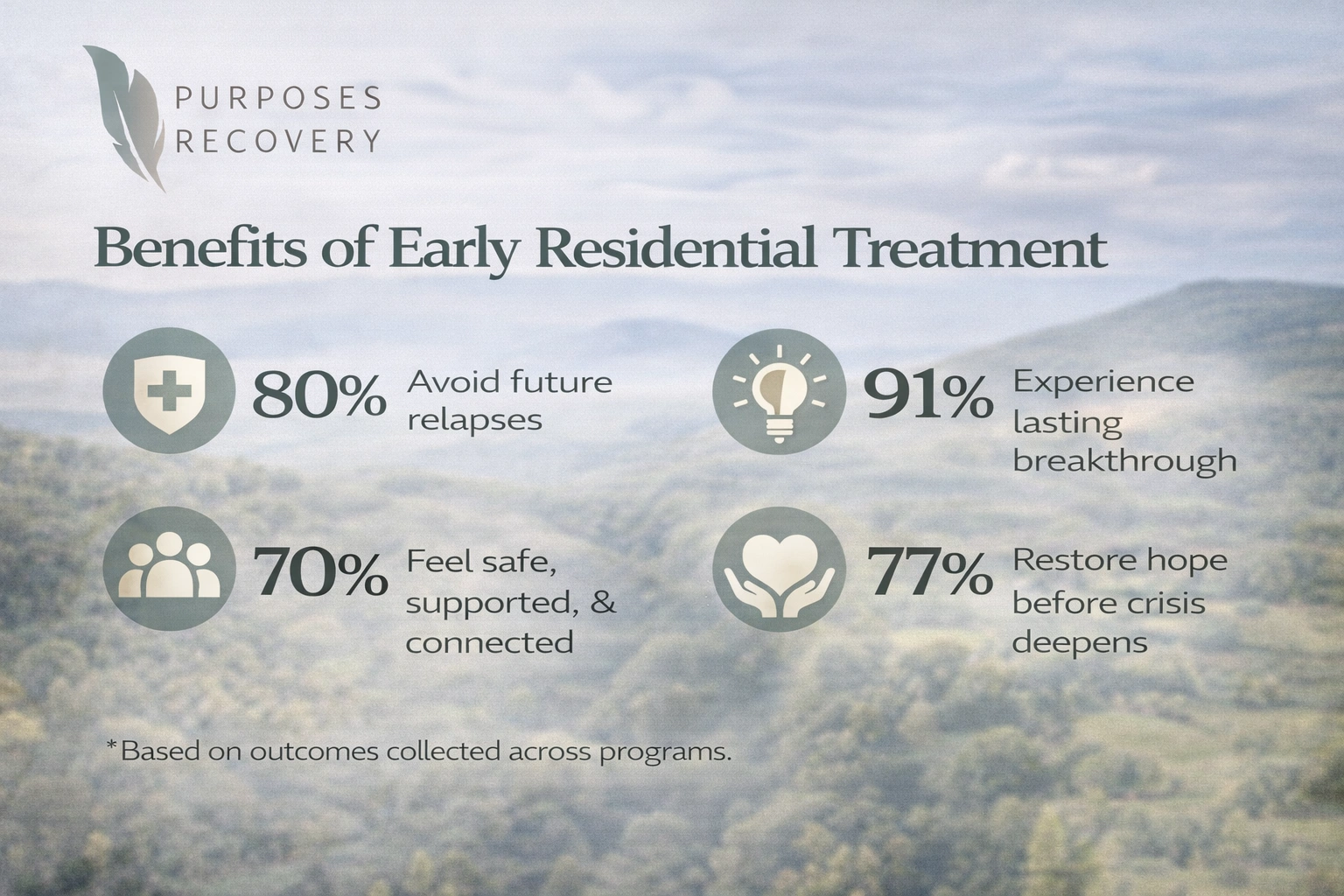
That’s why earlier intervention matters.
This is where a residential treatment program can save a life.
Not because you failed. Not because they’re broken. But because right now, time still matters—and connection is still possible.
Waiting for Rock Bottom Is a Dangerous Myth
It’s one of the most harmful phrases parents hear: “They have to hit rock bottom first.”
But what does that even mean? Jail? Overdose? Homelessness?
The truth is, rock bottom isn’t a prerequisite for recovery. It’s a cliff—and some people don’t make it back. We don’t wait for stage four to treat cancer. Why should we wait for total collapse to offer mental health and addiction support?
Earlier residential treatment isn’t about being dramatic. It’s about protecting what hasn’t been lost yet—and making recovery more reachable while there’s still traction.
Every Return to Use Raises the Stakes—Emotionally and Physically
Your child may say they “have it under control.” Maybe they did well for a while. But you can feel it: the edge is closer this time. Their energy is off. They’re slipping faster.
Here’s what doesn’t always get said out loud—relapse changes the brain. Every return to use reinforces neurological pathways that deepen addiction and emotional shutdown.
And while some people do “bounce back,” many don’t. Shame builds. Confidence drops. And hopelessness starts to sound a lot like reality.
Early intervention interrupts that before it hardens. The sooner we act, the more we can preserve their belief in themselves—and your ability to stay in this with them.
Earlier Care Gives the Brain More Time to Heal
The developing brain doesn’t finish maturing until around age 25. For someone in their late teens or early twenties, that window is still wide open.
That matters.
Neuroplasticity—your brain’s ability to adapt and rewire—is strongest during this period. Early treatment works with that advantage. It supports:
- Emotional regulation
- Impulse control
- Decision-making
- Long-term habit formation
The earlier residential treatment happens, the more resilient these systems become. And the more we can prevent deep-rooted damage that’s harder to reverse later.
You’re Not Overreacting—You’re Listening to Your Nervous System
You know your child better than anyone. If your gut is screaming, it’s not paranoia. It’s pattern recognition.
Parents in this situation often downplay their instincts because they’re tired of being “the bad guy” or accused of overstepping. But what if that inner alarm isn’t judgment? What if it’s love, still fighting?
Residential treatment isn’t just for kids in immediate crisis. It’s for kids who are drifting. Who are numbing. Who are changing in ways that scare you—but haven’t lost their grip entirely.
This is where stepping in early protects the relationship, the recovery process, and sometimes—literally—their life.
Residential Care Offers Something Outpatient Can’t: Total Containment
Outpatient care can help. So can therapy. But if your child is still living in the same environment, with the same triggers, the same people, and the same access to substances—progress can be painfully slow or impossible.
Residential treatment removes them from that cycle.
- No hidden bottles
- No late-night texts from old contacts
- No slipping through the cracks between appointments
Instead, they get 24/7 support, a routine they don’t have to build from scratch, and a buffer between them and the self-destructive choices they’ve leaned on in the past.
That distance? It’s not isolation—it’s oxygen.
Treatment Works Better When Willingness Is Still on the Table
A lot of parents wait for their child to say, “Okay, I’m ready.”
But what if you could act during the maybe phase?
Maybe I need help.
Maybe I want something different.
Maybe this can’t go on.
Those moments are fragile—but powerful.
When a residential treatment program begins during that flicker of willingness, outcomes are better. Resistance is lower. Engagement is deeper. The idea of recovery feels like a choice—not a punishment.
And for parents who’ve watched their child lose all sense of agency, this can be the bridge back to hope.
You’re Not Sending Them Away—You’re Giving Them Space to Come Back
Let’s name it: placing your child in residential treatment can feel like abandonment. Or defeat. Like you failed to fix it on your own.
But this isn’t giving up. This is giving over—to people trained to hold what’s become too heavy for one family to carry alone.
And you’re not excluded. Most programs (including ours) offer family therapy, regular updates, and real connection points. You’re not cut out—you’re held, too.
Early care doesn’t erase the pain. But it gives your child a better shot at walking back toward life—and you.
It’s Not Just About Them—It’s About You, Too
You’re not just watching your child suffer. You’re suffering, too.
Sleepless nights. Silent phones. The slow erosion of trust. The guilt. The anger. The exhaustion of having your love stretched so far past its limit it no longer feels like love at all.
Earlier treatment doesn’t just protect your child—it protects you. It gives you space to breathe. It reconnects you with support. It allows you to parent with a team, not from inside a storm.
You don’t have to do this alone. And you don’t have to wait until it breaks you.
FAQs: Residential Treatment for Young Adults
How is residential treatment different from rehab or inpatient?
Residential treatment provides a structured, supportive living environment with daily therapy, clinical oversight, and holistic care. It’s less hospital-like than inpatient but more immersive than outpatient. Think: live-in healing, not lockdown.
What if my child refuses to go?
That’s common. Often, initial resistance softens once the idea becomes real. We can help you frame the conversation and offer strategies for engagement—not coercion.
Is residential care only for addiction?
No. Many clients are also struggling with depression, anxiety, trauma, self-harm, or burnout. Residential care treats the whole person—not just the substance use.
Can I still talk to my child while they’re in treatment?
Yes. Most programs include structured communication plans that balance space for healing with ongoing family connection.
How soon can someone start?
Admission timelines vary by program and insurance, but early inquiry improves your chances of timely placement. If there’s even a maybe—start now.
If you’re wondering whether this is the moment to act—it probably is.
You don’t have to wait for things to fall apart completely to make a life-saving decision. Call (888) 482-0717 or visit residential treatment program in Los Angeles, CA to learn more about.