
There’s a quiet kind of pain that people rarely talk about.
The kind where you don’t actually want to die—you just can’t keep living with this much heaviness inside your chest. The kind where you don’t want to disappear; you just want the hurting to stop for a while. The kind where staying alive feels like holding your breath underwater and being told to “just swim.”
If you’re here, you probably know that feeling all too well. You’re not dramatic. You’re not broken. You’re tired, hurting, overwhelmed—and very much still human.
At Purposes Recovery, our Medical Detox Program in Los Angeles is often the first real pause people have had in years. Not a fix. Not a cure. Just a quiet place to rest, stabilize, and let someone hold the pain with you so you don’t have to keep carrying it alone.
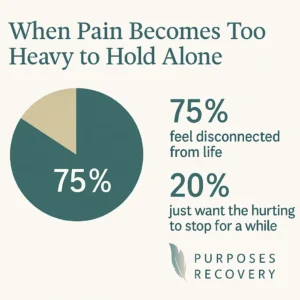
When Pain Becomes Too Heavy to Hold Alone
It’s hard to explain to someone who hasn’t been there.
You wake up already exhausted. You go through the day feeling like your body weighs twice as much as it should. Your mind won’t stop racing—or it won’t start at all. You’re here but not here. Present but not connected. Alive but not really living.
And then there’s this thought—not that you want life to end, but that you wish the pain would loosen its grip for even five minutes.
This is what we see every day in detox. People who aren’t trying to give up. People who just need a place where their suffering doesn’t have to be hidden, minimized, or explained away. Where someone finally says, “I hear you. Let’s slow down.”
A medical detox program offers physical stabilization, yes—but it also provides emotional breathing room. In detox, you don’t have to “be okay.” You just have to be here. That’s enough.
The Body and Mind Are Connected — And Both Need Care
When your emotional pain becomes overwhelming, your body reacts too.
When substances enter the picture—whether to numb, escape, quiet your thoughts, or get through the day—the nervous system becomes tangled in the fight. Before long, you’re battling two wars at once: emotional pain and physical dependence.
When the substances wear off, the hurt can come roaring back even louder. Withdrawal can amplify sadness, hopelessness, fear, and emotional numbness. Your mind becomes so full of noise that it’s impossible to think straight, let alone feel the small spark of wanting to stay alive.
A medical detox program helps lower that internal volume.
It addresses the chemical storm inside your body so your mind can start to breathe. Not completely. Not instantly. But enough to feel even the slightest shift. That early progress can lay the groundwork for thriving after medical detox, as continued treatment and support help transform initial stability into lasting recovery and personal growth.
Sometimes that tiny shift is the difference between “I can’t do this” and “Maybe I can rest for today.”
You’re Not Weak. You’re Overwhelmed — And Overwhelm Needs Safety, Not Strength.
People love to preach about resilience.
But they often forget that resilience requires rest. Any person—no matter how strong—will collapse eventually if they’re carrying too much for too long.
At Purposes Recovery, we don’t tell you to fight harder.
We don’t ask you to be brave.
We don’t ask you to believe everything will magically get better.
We only offer this:
You deserve a space where you don’t have to pretend you’re okay.
Detox allows you to step out of survival mode. When your body is stabilized and the chaos inside you quiets even a little, your emotions become easier to hold. And once you’re not drowning, you can start to consider what comes next.
What Medical Detox Looks Like When You’re Emotionally Overwhelmed
Detox is often misunderstood as something “just physical.” But at Purposes Recovery, detox is a deeply emotional space too—one where the staff move slowly, speak gently, and understand that even small decisions can feel impossible.
Here’s what you can expect:
- Round‑the‑clock medical care so you don’t have to worry about your body
- Medication support (when appropriate) to reduce physical and emotional distress
- Warm, steady staff who don’t rush you or expect emotional openness
- Rooms designed for quiet, not confrontation
- Support that meets you exactly where you are emotionally
You’re allowed to say, “I’m not okay.”
You’re allowed to say nothing at all.
You’re allowed to rest in silence until your mind catches up to your body.
That’s still progress.
The First Step Isn’t Hope — It’s Glimmers of Relief
A lot of people arrive at detox believing they’re too far gone, too tired, or too broken for a new beginning to matter.
But something happens when withdrawal stabilizes. When your body starts to feel safer. When the chemical chaos inside you settles enough that your thoughts are clearer and less jagged.
People often describe it like this:
- “The pain finally came down from a 10 to a 6.”
- “I could breathe deeper than I have in months.”
- “My thoughts slowed enough for me to sleep.”
- “I didn’t want to die. I just wanted the hurting to stop. Detox helped with that.”
It’s not joy.
It’s not happiness.
It’s the first hint of relief.
And relief—more than hope—is often what helps people keep living.
Letting Go of Pain Doesn’t Mean You’re Letting Go of Life
There’s a myth that seeking help means “trying to get better.”
But sometimes seeking help means something simpler: you don’t want to die, but you don’t know how to keep going like this.
A medical detox program doesn’t force you to be hopeful.
It gives you space to become less overwhelmed.
And when overwhelm softens, life becomes more survivable.
A body in crisis can’t hold emotional pain safely.
Detox gives your body a chance to stabilize so your mind isn’t carrying everything alone.
You’re not choosing life or death right now.
You’re choosing a pause.
A moment.
A safer starting point.
How Detox Becomes a Bridge to What Comes Next
After detox, many people feel just clear enough to believe in small next steps. Not big commitments. Not long programs. Just the next thing.
For some, that’s moving into our residential program.
For others, it’s stepping into outpatient care.
For many, it’s simply allowing someone to stay by their side while they figure out what’s next.
This transition also highlights how medical detox supports your partner, creating a foundation for healing while giving loved ones a clearer path to provide encouragement and ongoing support throughout recovery.
You don’t have to have answers.
You don’t have to promise anything.
You just have to let yourself be supported.
Detox is the first step toward stability—not a contract for the rest of your life.
FAQs About Medical Detox and Emotional Pain
Is detox helpful if my pain feels more emotional than physical?
Yes. When your body feels safer and more regulated, emotional pain often becomes easier to hold. Detox doesn’t erase the sadness, but it reduces the overwhelm.
Will I be forced to talk about my feelings?
No. Detox is not therapy. You share only when you feel ready. Most people spend their first days resting, stabilizing, or gently reconnecting with themselves.
What if I’m having suicidal thoughts?
You won’t be judged or punished. Our staff understands that these thoughts often come from exhaustion and emotional overload. You’ll be supported with calmness and care.
Can detox really make a difference in how hopeless I feel?
Many people report a noticeable shift once their body stabilizes. Detox can quiet the internal chaos, making emotional pain feel more manageable.
Do I have to commit to long-term treatment after detox?
Not at all. Detox is its own step. If you decide you want more support afterward, we’ll help you explore options gently and without pressure.
You Don’t Have to Carry This Alone
If you’re hurting—really hurting—please know this:
You don’t need to be certain about anything except the next small step.
You don’t need to believe things will get better.
You don’t need to promise anyone your future.
You only need one quiet place where your pain is taken seriously, and where your life is held gently until you can hold it yourself again.
A medical detox program can be that place.
Call (888)482-0717 to learn more about our Medical Detox Program services in Los Angeles, CA.