
You already know something has to change.
Maybe you’ve tried doing it on your own. Maybe you’ve kept it hidden, hoping it would pass. But lately, it’s become clearer: the way you’ve been living is no longer working. And that small voice asking if you need more than just willpower? It’s growing louder.
If you’re wondering whether a residential treatment program is “too much” or “too soon,” you’re not alone. Most people don’t think they’re the kind who ends up in residential care.
But that’s the lie pain tells you: that asking for help means something is broken.
The truth? Asking for more support means you’re finally done pretending.
And that’s where real change begins.
Learn more about our residential treatment program services in Los Angeles.
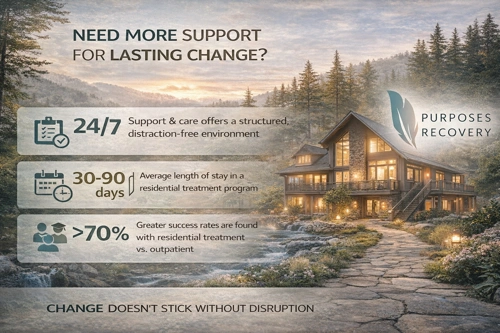
Change Doesn’t Stick Without Disruption
If healing was something you could’ve handled between errands, meetings, or Netflix scrolls, you would’ve done it by now.
But the truth is: real change needs real space.
It needs time away from the patterns, pressures, and people that keep pulling you back into old behaviors. That’s exactly what a residential treatment program offers—an intentional pause from survival so you can step into actual recovery.
You’re not just pressing pause on life. You’re pressing reset on what kind of life you’re building.
Structure Isn’t Restriction. It’s Safety.
A lot of people who come to us think that structure sounds like jail.
They worry they’ll lose their freedom. But what most discover is this: freedom didn’t disappear when they stepped into structure. It started to appear.
When your nervous system has been on high alert for months—or years—structure becomes soothing. Predictable meals. Gentle mornings. Support when you need it. Quiet when you crave it.
It’s not about being told what to do. It’s about finally not having to do everything alone.
In our experience, people from all over—whether someone is seeking a residential treatment program in Missouri or flying across the country—report the same thing: relief. Not from substances. From pressure.
Why Your Environment Matters More Than You Think
You can’t expect to feel different in the same space that shaped your pain.
Your home may feel safe. But it may also hold reminders—of habits, hiding spots, people, or patterns that made change impossible. Your job may give you purpose, but it may also demand performance when your soul needs rest.
Residential treatment removes the mental and emotional noise so your healing can finally be heard.
It’s why some people, even those with support options nearby, seek care beyond their home state—like those searching for a residential treatment program in New Jersey who find solace in starting fresh, away from the old rhythms.
Changing your environment doesn’t erase the problem. But it gives you a better shot at facing it without distractions.
You’re Not Weak. You’re Awake.
Most people don’t end up in residential care because they’re weak. They’re there because they’re awake.
They’re finally seeing the cost of keeping up appearances. Of hiding. Of holding it together until it breaks.
If you’ve been white-knuckling your way through mornings, smiling when you want to scream, pouring one more drink to take the edge off—this isn’t your punishment. This is your off-ramp.
You’ve already done the hardest part: noticing.
Now, the question becomes—what are you going to do with that awareness?
What Happens Inside Residential Treatment?
If you’re picturing a sterile hospital bed or movie-scene meltdowns, pause.
Here’s what most modern residential programs actually look like:
- Daily group therapy to learn, reflect, and be seen
- One-on-one counseling with trained, compassionate professionals
- Healthy meals and regulated sleep
- Activities that reconnect you to joy, presence, and choice
- Safety. Space. Slowness.
- Zero pressure to perform.
- Zero judgment for what brought you here.
You don’t have to have the answers. You just have to show up.
And maybe for the first time in your life, someone will meet you with care instead of consequence.
This Isn’t About Becoming Someone Else
This is a return—not a reinvention.
You’re not trying to be “fixed.” You’re not becoming a different person. You’re remembering who you are when fear, exhaustion, and substance don’t have the mic.
Healing isn’t self-improvement. It’s self-return.
It’s the version of you who didn’t need to numb. Who wasn’t always chasing peace through substances, scrolling, or pretending.
And you don’t have to do it perfectly. You just have to stop doing it alone.
Healing Begins Before You Feel Ready
Almost nobody enters treatment feeling 100% ready.
They enter tired. Scared. Confused about what comes next. But they also enter done—done with surviving, with half-healing, with nights that bleed into regret.
Here’s the truth we see every day: you don’t need to feel ready. You just need to feel willing.
And if you’re here, reading this? You’re already willing.
That’s enough.
FAQs About Residential Treatment Programs
Q: How long do I stay in a residential program?
Programs can range from 30 to 90 days or more. But it’s not about hitting a number—it’s about creating the foundation you need to keep healing outside of treatment.
Q: Will I have access to my phone or family?
Policies vary. Early phases often limit distractions to help you reconnect with yourself. But support from family is often integrated into later phases of care.
Q: What if I’ve never been to treatment before?
That’s okay. Many people begin with residential treatment because it provides the most immersive support, especially when change has felt impossible alone.
Q: What happens after I finish residential?
Aftercare is built in. Most programs, including ours, offer step-down levels of care like intensive outpatient treatment or alumni services to support your re-entry into daily life.
Q: Do I have to be “bad enough” to go to residential?
There’s no badge for suffering longer. If your current way of coping is no longer sustainable, that’s enough. You don’t need to earn help by breaking first.
This isn’t the end. It’s the interruption.
The one that says: enough survival. Enough silence. Enough shame.
You don’t have to know how it ends to take the next right step.
Call (888)482-0717 to learn more about our residential treatment program in Los Angeles, CA.