I didn’t pack the same way the second time.
The first time I came to treatment, I brought hope. Folded it up neatly between fresh socks and a list of goals. I thought I was done with alcohol for good. I thought I’d leave that place “healed.”
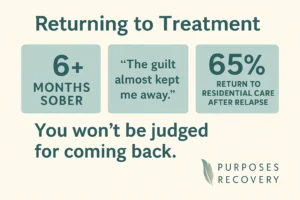
The second time, I packed fast. Threw stuff into a duffel bag. No plan. Just shame. I hadn’t even hit six months when I relapsed. Ninety-four days sober, then gone—one night, one drink, and everything I built started unraveling.
But here’s the truth: the unraveling didn’t really begin with that drink. It began the moment I started pretending I was fine when I wasn’t.
I thought everyone would judge me for coming back to residential treatment.
I was wrong.
The Guilt Almost Kept Me Away
If you’ve relapsed, you know this voice:
“You already had your chance.”
“You blew it.”
“They’re going to think you didn’t take it seriously the first time.”
That voice is loud. And it’s persuasive. I believed it for a while. I told myself I could just “get back on track” on my own. That I didn’t really need help again—I just needed to try harder.
But trying harder didn’t work. I white-knuckled my way through days that felt like shame marathons. I told my sober friends I was “fine” when I was barely getting out of bed. I avoided meetings. I didn’t answer texts from alumni or staff who reached out.
And deep down, I thought I couldn’t go back to Purposes Recovery. Not because they wouldn’t let me. But because I thought I didn’t deserve it.
What I Was Really Afraid Of
It wasn’t just being seen as a failure. It was the story I had told about myself unraveling.
In group, I had shared my proudest moments—how I stayed sober through the holidays, how I learned to be honest with my sister, how I cried for the first time in years and didn’t feel weak.
I thought if I came back, I’d have to look those same people in the eye and admit that I lost it. That I relapsed. That I needed help again.
But here’s the thing I wish I’d known:
Everyone who’s ever stayed sober knows what it means to almost lose it—or actually lose it.
The people I was scared to face? Many of them had been where I was. Some had come back more than once. And not one of them judged me.
Returning to Residential Treatment Didn’t Break Me—It Helped Me Heal
When I finally called, I expected a lecture.
Instead, I got a simple: “We’re glad you reached out. Let’s talk about how you’re doing.”
No drama. No guilt. Just space to be honest.
Re-entering Purposes Recovery’s residential treatment program in Los Angeles didn’t feel like starting over. It felt like picking up the thread I’d dropped.
I wasn’t treated like a new client. I wasn’t asked to “earn” my spot. I was asked what I needed now—and how we could make this round even more honest, more supportive, more real.
This Time, I Knew What to Say—and What I Needed
The second round of residential treatment wasn’t easier. But it was clearer.
I wasn’t wasting time trying to impress anyone. I wasn’t performing “good recovery.” I was raw. Honest. A little broken. But ready to be seen.
This time, I asked for:
- Deeper trauma therapy
- More help around grief, which I’d avoided the first time
- A chance to rebuild trust—not just with others, but with myself
- A slower pace, without the pressure to “graduate” or move on quickly
And the program made space for all of that.
Because returning to treatment wasn’t about doing it “right” this time. It was about doing it real.
I Wasn’t the Only One Coming Back
One of the biggest surprises? I wasn’t alone.
During my second stay, I met two other alumni who had also returned. One had been out for nearly a year before relapsing. The other had left against medical advice after 12 days and spent months spiraling.
We didn’t look like failures. We looked like people who wanted to live.
There was a kind of quiet strength in our presence—not just because we came back, but because we didn’t let pride stop us.
Recovery isn’t one clean line. It’s a map full of detours, rest stops, and unexpected reroutes. The people who return aren’t the ones who failed. They’re the ones who know what this work really takes.
What I’d Tell Someone Who’s Afraid to Come Back
If you’re reading this because you’re thinking about returning to treatment, here’s what I want you to know:
- You’re not weak. You’re wise enough to come back.
- You don’t need to explain everything. Just say, “I need help again.”
- You won’t be judged for leaving. You’ll be respected for returning.
- Relapse doesn’t erase your progress. It deepens your understanding.
- You are still worthy of care. Even now. Especially now.
This second round changed everything for me—not just because I stayed sober longer, but because I learned that real recovery is less about perfection and more about return.
What Makes a Good Residential Treatment Program for Returning Clients?
Coming back means you’re not new—but you’re also not done.
A good residential program will honor that space. At Purposes Recovery, that looked like:
- Individualized care plans that reflect where I’d been and where I was going
- Therapists who didn’t rehash Day 1 tools but helped me deepen my growth
- Peer groups that made space for relapse and return stories
- Staff who remembered me—and didn’t treat me differently because I was back
If anything, I felt more respected this time. Because I wasn’t pretending. I was present.
FAQs: Coming Back to a Residential Treatment Program After Relapse
Will I be welcomed if I return after a relapse?
Yes. At Purposes Recovery, returning clients are met with compassion, not judgment. We understand that relapse happens—and we believe returning is a powerful choice.
Will I have to redo the entire program?
Not necessarily. Your treatment plan will reflect your current needs and history. We build on what you’ve already learned, not erase it.
Will people treat me differently for coming back?
Not in a negative way. Many clients and staff see returning as a sign of commitment. You’re not “less than”—you’re someone who knows recovery takes time.
What if I’m embarrassed to call?
That’s okay. You can start with a text or email. You don’t need to have the perfect words—just a willingness to reconnect.
What if I relapsed and used heavily?
You’re still welcome. Whether you slipped once or spiraled for months, your return is valid. We’ll support you through detox if needed, and rebuild from there.
You Can Always Come Back—And You’ll Still Be Met With Care
There’s a moment between relapse and return where everything feels fragile. You wonder if you’re still allowed to try again. If you still belong in the circle.
Let me answer that for you:
Yes. You still belong.
You don’t have to prove anything. You just have to pick up the phone. Or send the message. Or take the breath and say, “I think I need help again.”
That’s enough.
It was for me.
Ready to begin again? We’re still here.
Call (888)482-0717 to learn more about returning to our residential treatment program in Los Angeles,. Planes are still running from Illinois, Indiana , Kansas. And we’ll meet you at the gate with compassion, care, and a ride back to what we hope will be your temporary home away from home.