
You made it through detox.
That may not feel like a victory yet. Surrounding yourself with the right people matters, and a recovery community can strengthen alcohol treatment outcomes. Maybe you’re sitting at home, staring at the same walls, wondering what happens now. Maybe the physical symptoms have eased, but the fear hasn’t.
At Purposes Recovery, we want you to know something important: what you’re feeling is common. Finishing detox doesn’t mean the hard part is over. It means you’ve reached the starting line of recovery. The next phase is about learning how to live without substances in the moments that used to revolve around them.
For many people, that next step includes a higher level of support, such as structured daytime care, while they begin building a foundation for long-term recovery.
Why Home Can Feel Scary After Detox
Many people imagine detox as the biggest hurdle.
In reality, coming home can feel surprisingly vulnerable.
During detox, there is structure. There are professionals checking in. There are schedules, routines, and support. Then suddenly you’re back in familiar surroundings. The couch is still there. The stress is still there. The loneliness may still be there.
The environment changed very little. You changed a lot.
That mismatch can feel unsettling.
The Hours Between Morning and Evening Matter More Than You Think
One of the most common fears people express after detox sounds something like this:
“What am I supposed to do all day?”
Substance use often takes up more time than people realize. There is the planning, obtaining, using, recovering, and thinking about the next opportunity to use.
When that disappears, it leaves empty space.
Early recovery isn’t just about avoiding substances. It’s about filling that space with things that support your health, stability, and purpose.
Without structure, long afternoons can start to feel endless. And when boredom combines with stress, cravings often become louder.
Recovery Doesn’t Require Confidence
A common misconception is that successful recovery starts with certainty.
It doesn’t.
Many people enter treatment feeling doubtful. Some are convinced they will fail. Others worry they aren’t strong enough.
Recovery isn’t built on confidence. It’s built on actions repeated consistently, even on days when confidence is nowhere to be found. Even nutrition plays a role — the balance of calcium and magnesium in addiction recovery can affect how you feel day to day.
Think of it like learning to walk on a new path through a forest. The first few trips feel awkward and uncertain. Over time, the trail becomes easier to follow because you’ve walked it before. Learning how your brain heals from addiction can give you real hope for the months ahead.
The same thing happens in recovery.
Being Alone Doesn’t Mean You Have To Do This Alone
Isolation can become one of the biggest challenges after detox.
Friends who still use substances may no longer feel safe to be around. Family members may not fully understand what you’re experiencing. You may feel caught between your old life and a new one that hasn’t fully formed yet.
This is where connection becomes important.
Support groups, therapists, recovery communities, and structured treatment programs can provide accountability and encouragement during a period that often feels uncertain.
Many people discover that the strongest protection against returning to old patterns isn’t willpower. It’s having people who know what they’re going through and who help them stay connected to their goals.
What If You Slip?
This question lives quietly in the minds of many people after detox.
What if I mess this up?
What if I can’t stay sober?
What if treatment works for everyone except me?
Fear of relapse can become so overwhelming that it overshadows progress. Building on that progress with relapse prevention training helps protect the life you’re starting to rebuild.
The reality is that recovery is not measured by perfection. It’s measured by persistence.
If you stumble, it does not erase the courage it took to seek help. It does not mean you’re incapable of recovery. It means something in your support system may need adjustment.
That’s one reason why discussions around relapse prevention after detox focus heavily on ongoing support, structure, and accountability rather than relying on motivation alone.
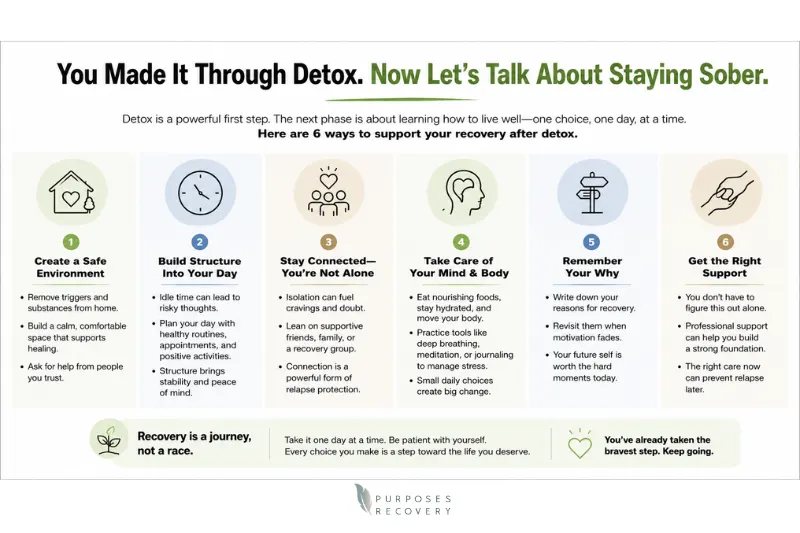
The Goal Isn’t Just Sobriety
Early recovery often begins with a simple goal: don’t use today.
That’s an important goal.
But over time, recovery becomes about much more than avoiding substances.
These 8 ways to get more energy during recovery can help the coming weeks feel less exhausting.
It’s about sleeping through the night without fear. Having conversations you remember. Rebuilding trust. Finding interests that aren’t centered around getting high or drunk. Feeling present in your own life again. Rebuilding a social life includes practical skills like hosting a party for sober guests.
Sobriety is the doorway.
The life waiting on the other side is the reason people keep walking through it.
You do not have to figure out the future all at once. You only have to focus on the next step.
At Purposes Recovery, we help people bridge the gap between detox and long-term recovery through structured support, clinical care, and guidance designed for the realities of early sobriety.
Call (888) 482-0717 or visit our partial hospitalization program services to learn more about our partial hospitalization program services.