
When your child steps back through your front door after completing a residential treatment program in Los Angeles, it may look like a moment of resolution. But inside, it often feels more like a beginning. These strategies for supporting your loved one’s recovery can make that new beginning feel less uncertain. The relief of having them home can sit right beside a quiet fear: What now?
You’re not alone if you feel unsure, overwhelmed, or even scared. Reintegration after treatment isn’t often talked about, but it’s one of the most tender and critical stages of recovery—especially for families. This guide is here to walk with you through it.
Reintegration Is a Chapter, Not a Closure
It’s common to think of residential treatment as the solution—and it is, in many ways. But healing doesn’t have a finish line. Reintegration is the next phase, where your child begins practicing what they learned in a less controlled, more complex environment: home.
This stage often involves:
- Rebuilding trust and communication
- Adjusting routines and boundaries
- Re-navigating emotional dynamics in the household
- Managing ongoing care or aftercare plans
Think of reintegration like re-entering Earth’s atmosphere: the spacecraft made it out of crisis mode, but the return still requires careful navigation and a strong landing system. And you’re part of that system.
Name the Awkwardness to Neutralize It
There’s often a gap between the child who left and the one who returns. The dynamic may feel unfamiliar. Maybe they’re quieter. Maybe you’re more cautious. Maybe your home feels both comforting and foreign to them.
Instead of trying to pretend everything is “back to normal,” try saying:
“It makes sense that this feels new or weird. We’re both figuring it out. I’m here.”
This kind of honest, soft framing gives everyone in the home permission to adjust, breathe, and not force closeness before it’s ready.
Routines = Safety (But Avoid Over-Control)
Residential treatment programs thrive on structure because it helps regulate emotions, restore sleep, and reduce chaos. Your child may be used to a scheduled rhythm now—but they’ll also want to reclaim autonomy.
Instead of rigid rules, co-create routines together. Examples include:
- Morning check-ins over breakfast
- Setting phone boundaries without demanding full access
- Agreeing on screen-free evening time
- Planning weekly therapy or support group attendance
Structure without micromanagement says: I trust you to take care of yourself—and I’m here to support you doing it.
Expect Emotional Whiplash—and Hold Steady
You may see progress one day and regression the next. You might feel like you’re walking on eggshells. This is normal.
Your child is readjusting to a world that once overwhelmed them. That might mean mood swings, sensitivity to certain topics, or new boundaries you didn’t expect. Try not to interpret these moments as rejection or disrespect.
What matters most is your steady presence. You don’t need perfect responses—just safe ones. Phrases like:
“Thank you for telling me that. I’m learning too.”
“That sounded hard. Do you want to talk or just have space?”
“I don’t need you to explain everything—I’m just glad you told me.”
These messages reinforce trust without demanding performance.
Support Their Ongoing Healing Without Pressure
Residential treatment is intensive, but it’s not a one-and-done fix. Most programs recommend continued therapy, psychiatry, or outpatient care. Encourage this gently—not as a test of progress, but as a natural part of ongoing support.
If your child seems resistant, normalize it:
“It’s okay to feel done for a while. And it’s also okay to still need help. Either way, we can figure it out together.”
Programs like our residential treatment program in Los Angeles often offer alumni groups, virtual sessions, and family check-ins. Don’t hesitate to reach back out—we’re here long after discharge.
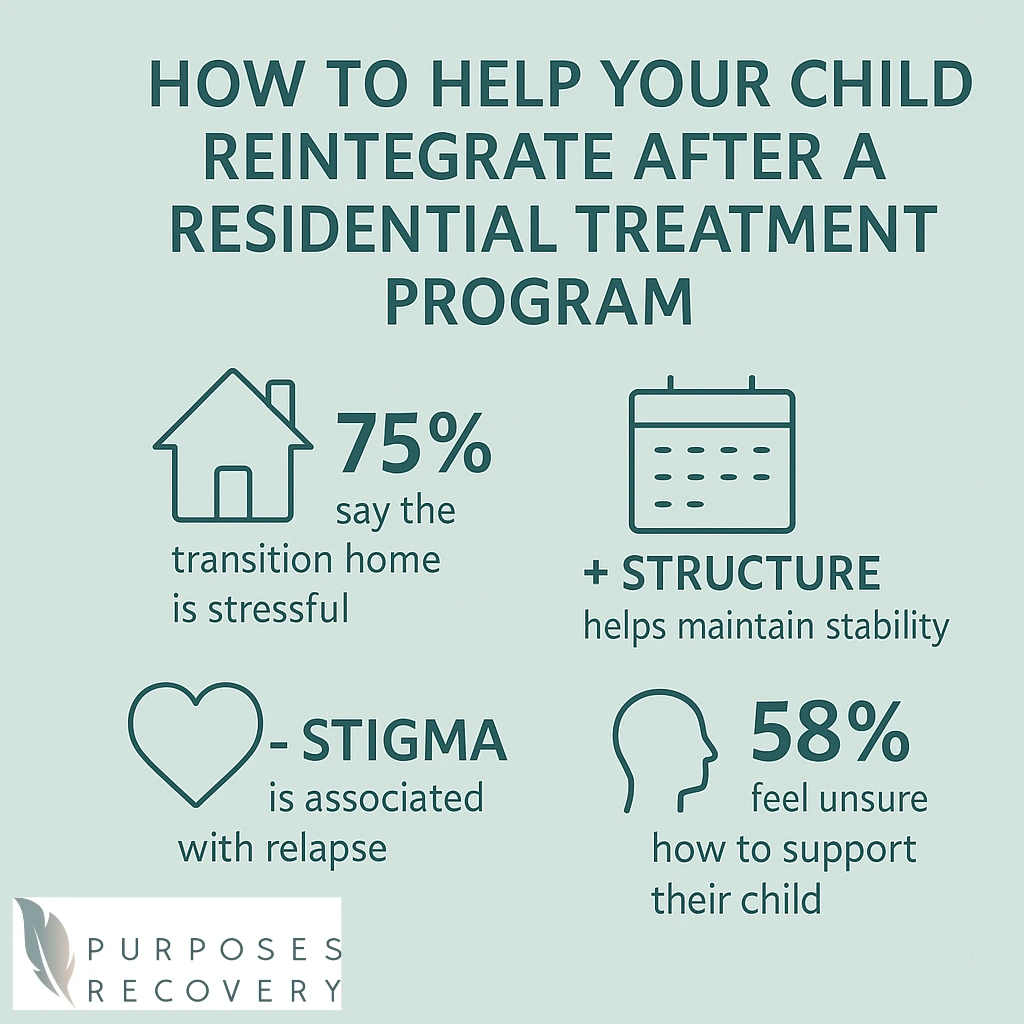
Reconnection Happens Quietly
Don’t underestimate the power of low-pressure time together. You don’t have to talk about recovery to support it. Sometimes healing looks like:
- Watching a favorite movie without commentary
- Running errands together in companionable silence
- Sharing a meal without talking about feelings
These small moments matter. They say: You’re not under a microscope. You’re still my child. We’re still us.
Take Care of You, Too
Your nervous system has been through a crisis, too. Many parents carry residual fear, exhaustion, or even resentment. You may feel guilty admitting that—but it’s part of the process.
Consider:
- Therapy for yourself
- Parent support groups (online or in-person)
- Setting boundaries around when you’re “on call” emotionally
Remember: your child’s healing doesn’t require you to be superhuman. It requires you to be resourced. The more grounded you are, the more safety you radiate.
You’re Not Alone in This
If your child received care through a residential treatment program in Los Angeles, there’s a whole team that’s still here. Reintegration support isn’t a bonus—it’s part of ethical, long-term care.
Even months later, you can call and ask:
- How do we handle sleep issues returning?
- My child doesn’t want therapy anymore—what now?
- I’m scared they’re hiding their symptoms—what should I do?
You don’t need a crisis to reach out. Let us be part of your long-term support system.
FAQ: Reintegration After Residential Treatment
What does reintegration really mean?
Reintegration is the period after your child returns home from treatment. It involves adjusting to life outside the structured environment, reestablishing trust and routines, and continuing the healing process within family life.
Should I keep my child on a strict schedule at home?
Structure helps, but rigid control can backfire. Aim for co-created routines that balance predictability with flexibility. Include your child in setting those rhythms to promote independence.
What if my child refuses follow-up care?
It’s common to feel “done” after intensive treatment. Try opening a gentle conversation: “What would make continued support feel more helpful or manageable right now?” Their resistance often softens when they feel heard, not pushed.
How do I rebuild trust after everything we’ve been through?
Start small. Show up consistently. Follow through on your own boundaries and promises. Trust isn’t rebuilt through big gestures—it grows in everyday safety.
Is it normal to still feel scared, even after treatment?
Yes. Many parents feel ongoing fear, even when things seem “better.” That’s a natural response to trauma. Seek your own support, and remind yourself that fear can exist alongside hope—not instead of it.
📞 You Don’t Have to Walk This Alone
Call (888)482-0717 or visit Purposes Recovery’s residential treatment program services in Los Angeles, CA to learn how we support families during and after treatment, also we serve in Illinois, Indiana, Kansas, New Jersey, New York, Ohio. You were never meant to do this without support.