
I walked into the partial hospitalization program numb. Not angry. Not hopeful. Just… empty.
A nurse handed me a clipboard. Someone smiled politely. A group therapy schedule was tacked to the wall like a school bell schedule. And all I could think was, This isn’t going to work.
It felt like I was standing in the middle of a warehouse of other people’s pain—everyone with louder stories, bigger breakdowns, more obvious reasons to be there. I wasn’t sure what mine was anymore.
That first week, I counted the exits in every room.
I Thought I Had to Feel Worse to Deserve Help
I kept telling myself I didn’t belong there.
I wasn’t hospitalized. I wasn’t screaming. I wasn’t a danger to anyone. I hadn’t even told my friends I was struggling because I couldn’t put words to it myself.
But I wasn’t okay.
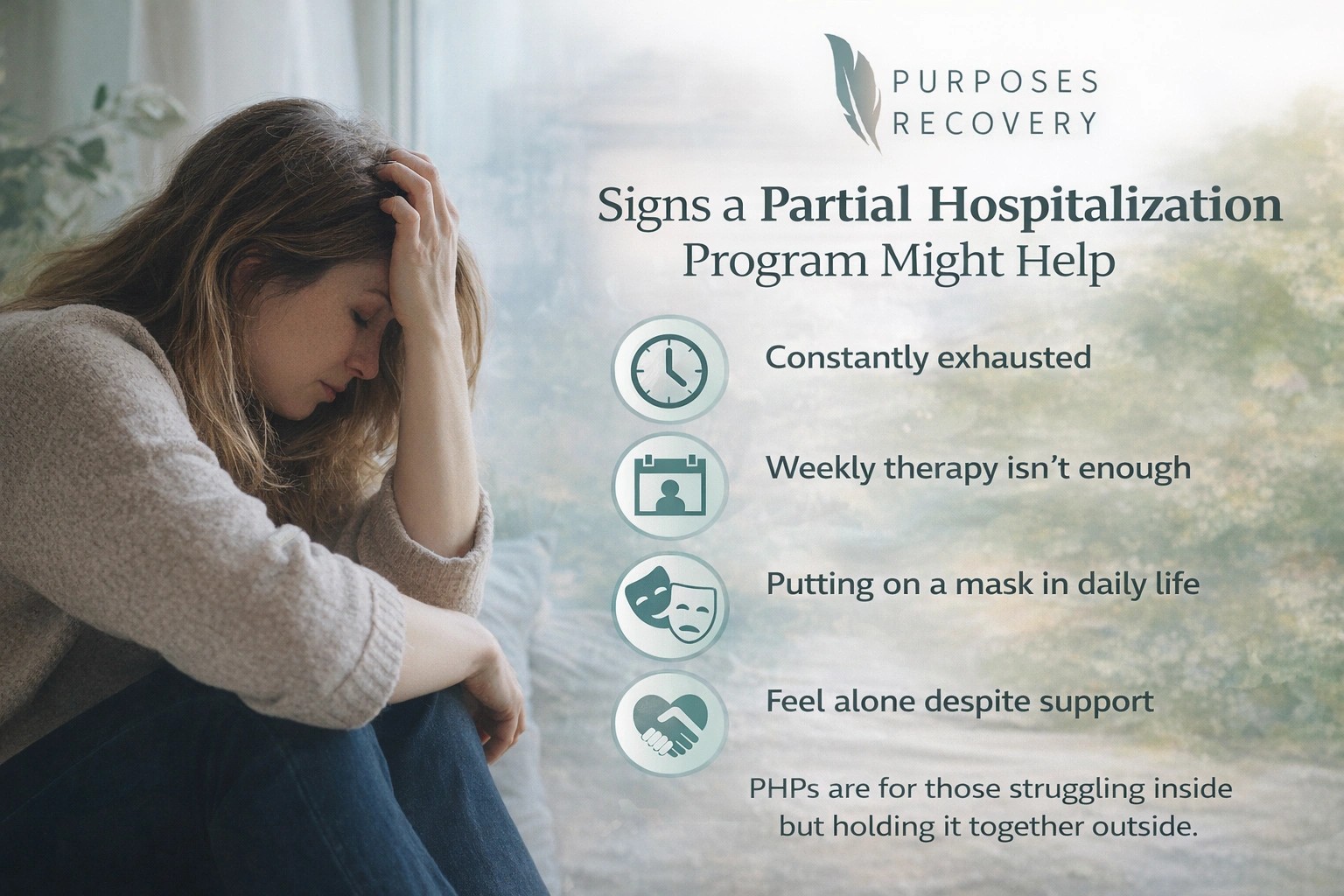
Here’s what I didn’t realize at the time: partial hospitalization programs aren’t just for rock-bottom moments. They’re for the in-between. For the people who are still functioning on the outside but unraveling quietly on the inside. Who need structure, but not inpatient. Who need more than just a weekly therapist visit, but don’t want—or can’t afford—to disappear from their life entirely.
I wish someone had said this to me sooner.
This is what a partial hospitalization program is actually built for.
I Was Waiting for a “Feeling”—But Healing Didn’t Show Up Like That
I thought I’d know it was working when I felt better. But day after day, I showed up to groups and sat there blank-faced, wondering if I was just wasting time and money.
I didn’t realize at the time that healing isn’t loud. It’s not a breakthrough moment or some glowing self-realization. It’s quieter than that.
Sometimes healing is showing up three days in a row when you wanted to quit after the first. It’s realizing you haven’t had a panic spiral this week. It’s telling the truth out loud, once, even if your voice shakes.
That’s the thing about emotional pain—it doesn’t leave obvious scars, so it’s easy to think you’re not “sick enough” to get help. But that’s the kind of thinking that keeps people stuck.
Group Therapy Felt Like a Performance at First
At first, group therapy felt like a bad high school drama class.
I didn’t know what to say. People cried. Others nodded solemnly. It felt like everyone had already been briefed on how to “share” and I was late to the playbook.
But over time, something strange happened. I stopped trying to say the right thing. I started listening.
One guy talked about how he used to turn his phone off for days when things got bad. A woman said she didn’t remember the last time she enjoyed a meal without guilt. And suddenly, these weren’t strangers anymore. They were mirrors.
I didn’t relate to everything. But I saw enough of myself in those conversations that the walls I built to “stay safe” started to feel like cages instead.
I Had to Let Go of the Idea That I Could Think My Way Out
If you’re the overthinker type (like me), you probably tried to logic your way through mental health. Self-help books. Podcasts. Personality tests. Reflection journals.
You tell yourself, “If I just understand my patterns, I can break them.”
But no matter how well I could explain my anxiety, I still woke up feeling like I’d already failed the day.
PHP helped because it interrupted the cycle. I wasn’t alone in my apartment spinning in my thoughts. I had structure. A reason to get up. People who expected me to show up.
For someone in Kansas, where mental health resources aren’t always easy to access, having a program that met me halfway without requiring inpatient commitment was life-saving.
The Clinician Didn’t Fix Me—But She Gave Me Permission
There was one moment I still remember clearly.
We were mid-group and I was rambling about how I didn’t feel anything, how I wasn’t making progress, and how I thought maybe I should just stop coming.
She looked at me and said, “What if it’s not your job to feel anything yet? What if your only job is to show up until it makes more sense?”
That stopped me cold.
I didn’t have to love it. I didn’t have to believe in it. I just had to keep showing up long enough to give change a shot.
Progress Looked Like Tiny Shifts I Barely Noticed at First
Eventually, things started to shift. Not dramatically. Not all at once.
I stopped needing to plan an escape route every morning. I started eating breakfast. I replied to texts. I went a whole session without checking the clock.
No one applauded. There wasn’t a bell to ring. But I noticed. And it felt real.
I started to understand why PHP exists—it’s the space between “fine” and “falling apart.” The kind of support that doesn’t ask you to pretend you’re okay, but doesn’t make you vanish from your life either.
And for someone in Missouri, juggling work, family, and their own invisible mental battle, that can make all the difference.
If You Think Treatment “Didn’t Work,” It Might Just Not Have Fit Yet
It’s easy to write off treatment when your first attempt doesn’t land. But not all programs are created equal, and not all timing is right.
Sometimes, it’s not you. It’s the environment. Or the structure. Or the fact that you weren’t ready to hear what was being said.
But that doesn’t mean you’re a lost cause.
It might mean the format was wrong—not the idea of getting help. Partial hospitalization programs are flexible. They give you more support than traditional outpatient, but they don’t require you to sleep on a hospital cot or explain to your job where you disappeared to for a month.
If you’re still unsure, check out what a PHP can actually offer you. You might be surprised by how many people quietly benefit from it—without dramatic breakdowns or big movie-moment recoveries.
FAQs About Partial Hospitalization Programs
What is a partial hospitalization program (PHP)?
A PHP is a structured mental health treatment program that offers intensive therapy during the day while allowing you to return home at night. It’s often used when someone needs more support than weekly therapy but doesn’t need inpatient hospitalization.
How long does a PHP usually last?
Most programs run for several weeks, with participants attending 5–6 hours a day, 5 days a week. Duration varies based on personal needs and progress.
Who should consider a PHP?
PHPs are a good fit for people struggling with anxiety, depression, trauma, or mood disorders who need daily support but can still manage basic self-care and home responsibilities.
What’s the difference between PHP and IOP?
An intensive outpatient program (IOP) is less time-intensive, usually around 3 hours a day. PHP provides more structure and support, which is ideal when symptoms are interfering heavily with daily functioning.
Will I be with people who are really in crisis?
Not necessarily. PHPs often serve a wide range of people—from those newly diagnosed to those managing chronic conditions. You’re not expected to compare your pain to anyone else’s.
Ready to take the next step, even if you’re not sure it’ll work?
We get it. Believing in treatment is hard when it hasn’t clicked before. But sometimes, a different structure makes all the difference. Call us at (888) 482-0717 or visit our partial hospitalization program services to explore what support could look like—this time, for real.