
You might not be in crisis. Life may still look “fine” from the outside.
But something inside you is asking a quiet question: What if things could be different?
If you’ve been thinking about stepping into deeper support—like live-in treatment in Los Angeles—the first step doesn’t have to be dramatic. Often, it’s simply allowing yourself to explore the possibility.
Here’s how to begin, even if part of you still isn’t sure.
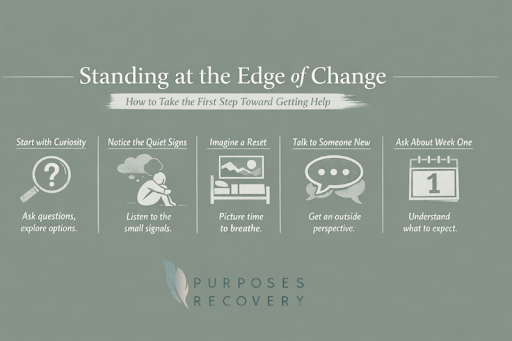
Start With Curiosity Instead of Commitment
A lot of people stall out because they believe the moment they ask about treatment, everything becomes permanent.
It doesn’t work that way.
The first step is curiosity, not a contract.
You can ask questions. You can learn what daily life looks like. You can explore whether the environment feels right for you.
Curiosity lowers the pressure. And sometimes, that’s exactly what allows the truth to surface.
Pay Attention to the Quiet Signs
Most people who start exploring deeper support didn’t wake up one day and suddenly decide.
It’s usually smaller signals:
- You feel tired of managing everything alone
- Your relationship with alcohol or substances feels heavier than it used to
- You’ve tried cutting back, but it keeps creeping back in
- You wonder what life might feel like with real space to reset
None of those automatically mean you need treatment.
But they are worth listening to.
Let Yourself Imagine a Reset
One fear keeps many people stuck: What if treatment turns my life upside down?
But for many people, the bigger surprise is the opposite.
Time away from the noise—work stress, social pressure, constant decision-making—can feel like breathing again.
A structured environment with round-the-clock support gives your nervous system something it may not have had in a long time: room to settle.
Sometimes the first step is simply imagining what that kind of reset could feel like.
Talk to Someone Who Isn’t in Your Everyday Life
Friends and family care about you. But they’re also emotionally involved.
Speaking with someone outside your immediate circle—a counselor, admissions specialist, or recovery professional—can offer a different kind of clarity.
You don’t have to prove anything.
You don’t have to explain your entire history.
You can simply say:
“I’m thinking about getting help, but I’m not sure.”
That conversation alone can shift a lot.
Ask What the First Week Actually Looks Like
The unknown is often scarier than reality.
Many people imagine strict rules, pressure, or judgment. But the first days of a supportive environment are often slower than expected.
They focus on things like:
- Settling in
- Getting to know the team
- Understanding what you need
- Creating a plan that fits your life
It’s less about “fixing” you and more about helping you finally exhale.
Remember: You Don’t Have to Be Certain
Here’s something people rarely say out loud:
Most people who enter a residential treatment program weren’t 100% sure when they started.
They were curious.
Tired.
Ready for something to change.
Certainty often comes later—after you’ve taken the step.
The First Step Is Smaller Than You Think
Change rarely starts with a giant leap.
It usually begins with a quiet decision:
Maybe I should look into this.
If that thought has crossed your mind, you’re already closer than you realize.
Call (888)482-0717 or explore our residential treatment program services in Los Angeles to learn more about your options.
You don’t have to decide everything today. Sometimes the bravest step is simply starting the conversation.