Even after getting through detox, it’s common to feel disoriented—like you just stepped off a moving train and aren’t sure where the ground is. You might think, “I should feel better by now,” but the truth is, detox only clears your system. Recovery starts with what you do next. At Purposes Recovery, we help you turn that fragile first step into something solid.
For some alumni, relapse comes as a surprise—even after months of sobriety. If you’re reading this after slipping back into drinking, know this: relapse doesn’t erase your progress. It’s not the end of your recovery. It’s a sign that your next phase of support needs to look different, not that you’re starting from zero.
Why Detox Isn’t Enough on Its Own
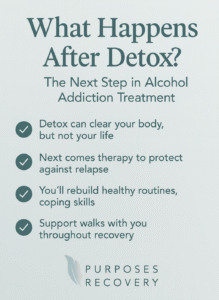
Detox is designed to manage withdrawal symptoms and keep you medically safe while alcohol leaves your system. That’s essential, but it doesn’t touch the deeper reasons alcohol became such a constant in your life.
Here’s what detox does:
- Stabilizes your body after alcohol use.
- Manages potentially dangerous withdrawal symptoms.
- Gives you a clearer head to make treatment decisions.
Here’s what detox doesn’t do:
- Teach you coping skills for stress and triggers.
- Rebuild your confidence and self-worth.
- Repair damaged relationships or daily routines.
Without follow-up care, it’s easy to fall back into old patterns. This isn’t about weakness—it’s about the brain needing time, tools, and practice to live without alcohol. That’s where ongoing alcohol addiction treatment comes in.
The First Days After Detox: What to Expect
Physically, you may feel relief. Emotionally, you might feel exposed. The numbing effect of alcohol is gone, and your mind is waking up to everything it avoided.
Common experiences after detox include:
- Mood swings and irritability.
- Heightened anxiety or depression.
- Sleep changes—sometimes insomnia, sometimes oversleeping.
- A sense of being “raw” or “on edge.”
One client once told me, “It was like all my feelings were sitting right under my skin.” That’s why the first days are about stability and safety—making sure you’re not left alone to wrestle with these emotions without support.
Choosing the Right Level of Care
Post-detox care should be tailored to your needs, lifestyle, and current stability. You might consider:
- Residential Treatment: Full-time, structured environment with 24/7 support. Ideal if you need complete separation from drinking triggers.
- Partial Hospitalization Program (PHP): Daytime treatment with evenings at home or in sober housing. Good for those who need intensive therapy but can manage nights independently.
- Intensive Outpatient Program (IOP): Several hours of therapy a week while continuing work or school. Best for people with stable housing and strong outside support.
If you’re not sure where you fit, a clinical assessment can guide you. At Purposes Recovery, we help you choose based on your emotional readiness—not just what’s convenient.
Learning to Live Without the “Old Normal”
Alcohol often becomes a daily backdrop—marking the end of a workday, smoothing over awkward moments, or filling long weekends. Post-detox treatment is about creating a new normal that feels real and sustainable.
That might mean:
- Rebuilding morning routines without hangovers.
- Finding friends who don’t measure fun by the drink.
- Discovering hobbies that aren’t just ways to pass time until your next drink.
It’s not just about avoiding alcohol—it’s about building a life that makes drinking feel less appealing.
Building Emotional Resilience
Relapse often begins long before the first drink. It can start with stress, isolation, or self-doubt. Post-detox treatment helps you spot those early signs and respond before it snowballs.
We work on:
- Recognizing Triggers: Internal (emotions, thoughts) and external (people, places, events).
- Coping Strategies: Mindfulness, journaling, physical activity, therapy.
- Self-Compassion: Shifting from “I failed” to “I hit a rough patch, and I can recover.”
As one alumnus said after re-engaging in treatment, “Once I stopped blaming myself for every craving, I finally felt like I could move forward.”
Why Los Angeles Is a Strong Recovery Setting
Los Angeles offers more than just beautiful weather. The city’s recovery scene is active, diverse, and welcoming. You can find:
- Community-based programs that feel personal and intimate.
- Larger treatment centers with specialized therapies.
- Sober living homes that blend structure with independence.
And because LA is such a large, connected city, you can build a support network that spans neighborhoods, interests, and cultures—so you don’t have to feel like the “only one” living alcohol-free.
Staying Engaged: The Key to Long-Term Sobriety
Whether you’ve just completed detox or you’re coming back after relapse, the most important thing is to stay connected. That might mean therapy, group meetings, alumni activities, or regular check-ins with a sponsor. The further you drift from support, the easier it is for old patterns to creep back in.
Recovery is a long game—and every day you choose to stay engaged, you strengthen the foundation you’re building.
FAQs About Life After Detox
1. How long should I stay in treatment after detox?
There’s no one-size answer. Many people benefit from at least 30–90 days of structured care after detox, but some stay longer depending on their needs and support systems.
2. Can I work while in treatment?
Yes, if you’re in an IOP or certain PHP programs. Residential programs typically require taking time off to focus solely on recovery.
3. What if I relapse during treatment?
Relapse is not uncommon, and it’s not the end. We adjust your treatment plan to address what triggered it and give you more tools to prevent it in the future.
4. Will I still have cravings after detox?
Yes, cravings are normal—especially in the first year. Treatment helps you understand and manage them so they don’t control your choices.
5. Is outpatient care enough after detox?
For some, yes—especially if you have strong support at home. For others, a more intensive level of care is better to start with.
Ready to take the next step?
Call (888)482-0717 or visit our Alcohol Addiction Treatment services in Los Angeles, CA to find a program that meets you where you are—so you can keep moving forward, not back.