
There’s a moment many parents can’t quite put into words.
Something shifts. The behavior, the mood, the distance—it stops feeling like a phase and starts feeling serious.
If you’re in that moment right now, you’re not alone. And more importantly, there is a way forward.
Early in this process, many families begin exploring options like structured daytime care—a level of support that meets people in the middle, when things feel urgent but not hopeless.
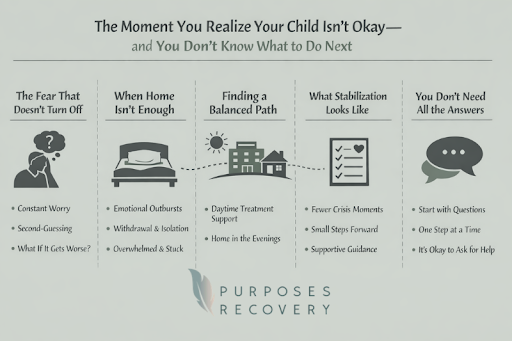
The Fear That Doesn’t Turn Off
You might be replaying conversations in your head.
Wondering if you missed something.
Questioning every decision you’ve made as a parent.
This kind of fear is exhausting because it doesn’t come with clear instructions. It just sits there, asking: What if things get worse?
What we want you to know is this—fear doesn’t mean failure.
It means you’re paying attention.
When Home No Longer Feels Like Enough
There comes a point where love, structure, and support at home don’t seem to reach what your child is going through.
You may notice:
- Emotional outbursts that feel unpredictable
- Withdrawal from friends, school, or daily life
- Rapid changes in mood or behavior
- A sense that they’re overwhelmed—and you are too
This is often where families feel stuck. Not because they don’t care, but because the situation has outgrown what one household can hold.
A Middle Ground That Many Parents Don’t Know Exists
Some parents believe there are only two options:
Keep managing things at home, or consider full-time, live-in care.
But there’s a middle path.
Structured daytime care allows your child to receive consistent, professional support during the day while still returning home at night. It creates a rhythm—something steady to hold onto when everything else feels uncertain.
For many families, this becomes the first real moment of relief. Not because everything is fixed overnight, but because they’re no longer carrying it alone.
What Stabilization Actually Looks Like
Stability doesn’t always mean calm right away.
Sometimes it looks like:
- Fewer emotional spikes, even if things are still hard
- Your child starting to express what they’re feeling
- Small routines returning—sleep, meals, basic structure
- A team helping you understand what’s happening beneath the surface
It’s not about forcing change.
It’s about creating the conditions where change can begin.
You Don’t Have to Have All the Answers
One of the hardest parts of this experience is the pressure to “figure it out.”
You don’t need a perfect plan.
You just need the next step.
Reaching out, asking questions, exploring options—that’s enough for today.
There’s a quiet strength in saying, “I don’t know what to do, but I know we need help.”
How to Take the First Step Without Overwhelming Yourself
You don’t have to commit to anything right away.
Start with a conversation.
Ask:
- What kind of support does my child need right now?
- How intensive should that support be?
- What does a typical day of care look like?
Even gathering information can bring a sense of control back into a situation that feels out of control.
A Final Thought for Parents Carrying This Alone
If you’re reading this, it means you’re still showing up.
Still searching. Still trying.
That matters more than you think.
There are options that meet your child where they are—without judgment, without pressure, and without expecting you to have it all figured out.
If you’re ready to talk through what support could look like for your family, call (888)482-0717 or explore our structured daytime care options to learn more about our partial hospitalization program services.