
A lot of people imagine alcohol problems as dramatic. Missed jobs. Broken relationships. Public disasters. Recognizing the quieter signs early makes choosing the right alcohol addiction treatment path much easier.
But for many of us, it started with something much quieter.
A slow drift.
One drink becoming three. Friday becoming every night. A promise to cut back becoming another promise pushed to next week.
If you’re searching for answers and wondering whether you can make a change on your own, you’re not alone in that question. Many people explore ways to address alcohol addiction long before they’re ready to consider formal treatment.
I’ve been around recovery long enough to tell you something important: the real danger isn’t always the drinking. Sometimes it’s how quickly we get used to living smaller lives around it.
Stop Arguing With Yourself Every Day
One of the most exhausting parts of drinking isn’t the alcohol.
It’s the constant negotiation.
Today I’ll only have two.
Not during the week.
Just at social events.
Starting Monday.
That mental back-and-forth can consume more energy than people realize.
If you want to make a change, start by removing the daily debate. Make a clear decision for a specific period of time. Thirty days. Sixty days. Ninety days. Before the drift goes further, a residential treatment program can start you on the right path.
You don’t have to solve the rest of your life today.
You just need enough space to hear yourself think again.
Build Structure Before Motivation Disappears
Many people wait until they feel motivated.
That’s usually a mistake.
Motivation is unreliable. Structure lasts longer.
Create a plan for the hours you normally drink. Schedule workouts. Call friends. Attend recovery meetings. Take evening walks. Join a hobby group.
Think of it like putting guardrails on a mountain road. The goal isn’t perfection. The goal is making it harder to slide back into old habits during difficult moments.
Be Honest About What Alcohol Was Doing For You
Everyday situations matter too, like hosting a party with sober guests without making anyone feel singled out.
This is where things get uncomfortable.
Alcohol usually serves a purpose.
Maybe it helped you relax.
Maybe it helped you socialize.
Maybe it numbed loneliness, anxiety, grief, or boredom.
If you don’t identify the job alcohol was doing, you’ll spend months fighting symptoms instead of solving the problem.
Ask yourself:
- What feeling am I trying to escape?
- What situation makes me want to drink most?
- What do I believe alcohol gives me?
The answers matter more than most people think.
Find People Who Understand the Conversation in Your Head
Isolation is fertile ground for alcohol problems.
Connection changes things.
That doesn’t mean you need to tell everyone your business. It means finding a few people who understand what you’re trying to do.
Support groups, sober communities, trusted friends, recovery alumni networks, and therapists can all help.
One of the biggest myths about trying to quit drinking without rehab is that you have to do everything alone.
You don’t.
And frankly, most people who succeed long term don’t.
“I wasn’t craving alcohol every day. I was craving connection. Once I figured that out, everything started changing.”
Pay Attention to Warning Signs You’re Losing Ground
The slippery part about alcohol is that setbacks often happen before the first drink. Quick fixes rarely work — the truth about passing a drug test with home remedies makes that clear.
Watch for signs like:
- Romanticizing old drinking memories
- Pulling away from supportive people
- Increased stress and isolation
- Thinking you’ve completely outgrown the problem
- Constantly testing your limits
Recovery isn’t usually lost in a single moment.
It’s lost in small decisions that pile up quietly.
Know When Self-Directed Change Isn’t Enough
This is the part nobody likes to talk about.
Sometimes willpower isn’t the issue.
Sometimes the level of dependence, cravings, withdrawal symptoms, or emotional pain requires more support than a person can provide themselves.
If you’ve tried repeatedly to stop and keep finding yourself back in the same place, that doesn’t mean you’re weak.
It means the strategy may need to change.
There is a difference between needing help and failing.
Many people who successfully quit drinking without rehab still use counseling, recovery groups, medical support, or structured treatment resources at some point along the way.
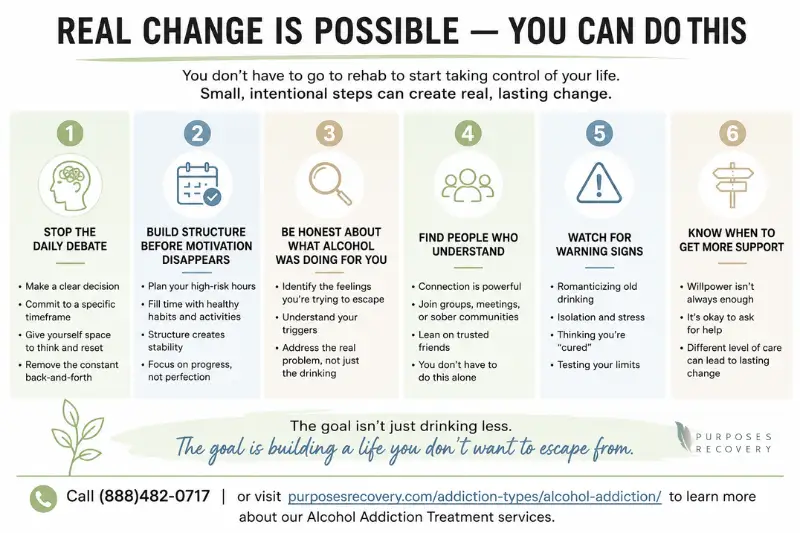
The Goal Isn’t Just Drinking Less
Here’s something I wish someone had told me earlier.
The goal isn’t simply removing alcohol.
The goal is building a life that doesn’t constantly make alcohol feel necessary.
Often the story is quieter, which is why how alcohol addiction treatment helps you reclaim your life is worth reading.
That’s a very different mission.
One focuses on deprivation.
The other focuses on freedom.
If you’ve been feeling stuck, disconnected, or caught in the same cycle, don’t mistake that feeling for proof that change isn’t possible. Sometimes it’s simply a sign that your current approach has taken you as far as it can.
Call (888)482-0717 or visit our Alcohol Addiction Treatment services to learn more about our Alcohol Addiction Treatment services.