
I’ve met a lot of people who tried treatment once and walked away thinking, Well… that didn’t work.
Some left early. Some finished and slipped back into old patterns. Some just felt like the program never really reached them.
And yet—months or years later—they come back. Not because they failed. Because something shifted.
Early on, many people re-enter care through options like structured daytime care, where they can rebuild momentum without starting from zero.
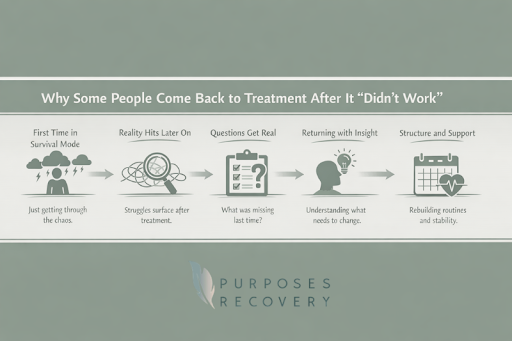
The First Time Often Happens in Survival Mode
A lot of people enter treatment during chaos.
Maybe a family pushed for it. Maybe work was on the line. Maybe things had gotten scary enough that there wasn’t another option.
But survival mode isn’t the same as readiness.
You might show up physically while your mind is still somewhere else—angry, skeptical, numb, or just exhausted.
That doesn’t mean treatment failed. It often means you were still trying to understand what was happening to you.
Sometimes the Real Work Starts After You Leave
There’s something people rarely talk about.
The weeks or months after treatment can reveal things that weren’t obvious before.
You might notice:
- The same stress patterns returning
- Old environments pulling you back
- Mental health symptoms getting louder without substances masking them
Those moments can feel discouraging. But they’re also incredibly clarifying.
For some people, that’s the first time they truly understand what kind of support they actually need.
Skepticism Isn’t the Enemy
If you’ve ever thought, “Treatment doesn’t work,” you’re not alone.
A lot of people carry that belief after their first attempt.
And honestly? That skepticism can be healthy.
Blind optimism rarely helps in recovery. Real change usually comes from asking harder questions:
- What didn’t work for me last time?
- What support was missing?
- What was I not ready to face yet?
Those questions can lead people back—not with blind hope, but with clearer expectations.
The Second Attempt Is Often Different
Something interesting happens with people who return to care.
They show up differently.
Not perfect. Not fearless. But more honest.
The conversations get deeper. The resistance softens a little. People start saying things like:
“I think I know where I got stuck last time.”
That awareness can make the second round of treatment feel less like starting over and more like picking up unfinished work.
Structure Helps Rebuild Momentum
After a setback, jumping straight back into full daily life can feel overwhelming.
That’s why some people step into a partial hospitalization program during their return to care.
The structure helps stabilize things again—sleep, routines, therapy, accountability—without completely removing you from the outside world.
It’s not about repeating the same experience.
It’s about giving yourself another shot with more clarity this time.
Setbacks Don’t Mean the Door Is Closed
One of the biggest myths in recovery is that treatment should “work” perfectly the first time.
But healing rarely moves in straight lines.
Sometimes it looks more like this:
Try. Learn. Slip. Understand more. Try again.
Each attempt teaches you something about yourself—your triggers, your patterns, your limits, and your strengths.
And that knowledge matters.
Recovery doesn’t require you to believe everything will work perfectly this time. Sometimes it just asks you to stay curious enough to try again.
If you’re reconsidering support after a setback, you can call 888-482-0717 or explore our structured daytime care options to learn more about our partial hospitalization program services in your area.