
For decades, the street name china white referred to a specific type of high-purity heroin. Today, that assumption can be deadly.
In many parts of the United States, people who believe they are buying heroin are actually receiving fentanyl or a fentanyl-containing mixture. Dealers may still use familiar street names like “china white,” but the substance inside the bag is often far more potent and far less predictable.
Understanding how the meaning of china white has changed isn’t just about drug terminology. It could help explain why opioid overdose deaths increased so dramatically over the past decade and why even experienced heroin users face an unprecedented risk.
What “China White” Originally Meant (and Why the Name Stuck)
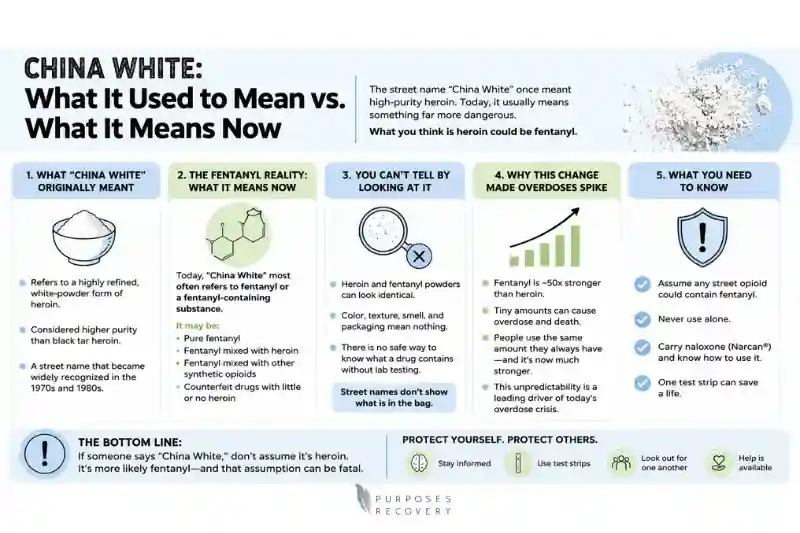
Historically, china white referred to a highly refined, white-powder form of heroin. Unlike black tar heroin, which is dark and sticky, china white heroin had a fine, white appearance that many associated with higher purity.
The name became widely recognized during the 1970s and 1980s as heroin trafficking patterns changed. Over time, it became part of street vocabulary rather than a reliable description of what was actually being sold.
That distinction matters today. Street names often survive long after the substances themselves change.
Someone may ask for “china white” expecting heroin because that’s what the term meant years ago. In today’s illicit drug market, that expectation is often dangerously outdated.
The Fentanyl Reality: Why China White Rarely Means Heroin Anymore
Today, china white frequently refers to fentanyl rather than heroin.
Fentanyl is a synthetic opioid that is approximately 50 times stronger than heroin by weight. Because it is cheaper to manufacture than growing and processing opium poppies, illicit drug suppliers increasingly replaced or mixed heroin with fentanyl.
As a result, people purchasing what they believe is heroin may actually receive:
- Pure illicitly manufactured fentanyl
- Fentanyl mixed with heroin
- Fentanyl mixed with other synthetic opioids
- Counterfeit drugs containing fentanyl with little or no heroin present
This shift has fundamentally changed the risk profile of street opioids. Someone using the same amount they previously tolerated may unknowingly consume a dose containing enough fentanyl to cause a fatal overdose.
Why You Cannot Tell the Difference by Looking at It
One of the most dangerous misconceptions is that heroin and fentanyl can be identified by appearance.
They cannot.
Powder color, texture, packaging, or street names provide no reliable information about what a substance contains. White powder can be heroin, fentanyl, another synthetic opioid, or a mixture of several drugs. Even experienced users cannot accurately identify the contents through sight, smell, or taste.
Illicit drugs are produced without quality control. Two bags that appear identical may contain dramatically different amounts of fentanyl, creating unpredictable overdose risk.
The reality is simple: there is no visual test that can confirm whether a substance sold as china white is heroin or fentanyl.
How This Change Made Overdose Deaths Spike — and Why It Matters Right Now
The transition from heroin to fentanyl is one of the biggest reasons opioid overdose deaths increased so sharply across the United States.
Fentanyl’s extreme potency means that very small differences in dosage can have life-threatening consequences. As fentanyl became more common in the illegal drug supply, many people unknowingly consumed far stronger opioids than they expected.
This affected not only people with opioid dependence but also individuals who:
- Returned to heroin after a period of abstinence and had lower tolerance
- Used heroin only occasionally
- Bought drugs from a new source
- Took counterfeit pills believing they contained prescription medications
Because fentanyl is now widespread throughout the illicit opioid market, assumptions based on old street terminology can be fatal. A person who believes they understand the risks of heroin may unknowingly face a completely different level of danger.
Getting Help for Heroin or Fentanyl Dependence in Los Angeles
Whether someone is using heroin, fentanyl, or a combination of both, opioid dependence is a medical condition that can be treated.
Many people delay getting help because they aren’t sure exactly what they’re using. In reality, the specific street name matters less than recognizing that opioid use has become difficult to control or increasingly dangerous.
At Purposes Recovery, we help people facing opioid addiction with individualized treatment that addresses both the physical and psychological aspects of recovery. If you or someone you care about is struggling with heroin or fentanyl use, learning more about our heroin addiction treatment program is an important first step toward lasting recovery.
Recovery is possible, even after fentanyl exposure has made opioid use more dangerous than ever before.
Frequently Asked Questions
What is china white?
Originally, china white referred to a highly refined white-powder heroin. Today, the term is often used inconsistently in the illegal drug market and frequently refers to fentanyl or drugs containing fentanyl rather than heroin.
Is china white fentanyl?
In many areas, yes. While china white historically meant heroin, it now commonly refers to illicit fentanyl or fentanyl mixed with heroin. Because street names are unreliable, there is no guarantee what substance is actually being sold.
Why is china white so dangerous now?
The danger comes from the widespread presence of fentanyl. Fentanyl is significantly more potent than heroin, and people often cannot tell what they are using based on appearance or street names alone. This unpredictability has contributed to the dramatic increase in opioid overdose deaths across the United States.