
There is a moment many parents reach that they never imagined.
You’ve done everything you know how to do.
You’ve talked, supported, argued, forgiven, and tried again.
And yet your child is still struggling.
When families begin exploring live-in treatment and round-the-clock support, it’s rarely because they stopped believing in their child.
It’s because they care enough to recognize that love alone sometimes isn’t enough to change a deeply ingrained pattern.
That realization can be painful. But it can also be the beginning of something hopeful.
The Quiet Weight Parents Carry
Parents rarely talk about the emotional weight they carry when their child is struggling with substance use.
Many replay the past over and over.
Was there a moment I missed?
Did I push too hard?
Was I too forgiving?
These questions often live quietly in the background of a parent’s mind.
But addiction rarely comes from one parenting decision or one family event. It usually grows from a complex mix of factors—biology, emotional pain, social influence, stress, and mental health challenges.
Blame rarely moves recovery forward.
Support does.
What matters now is helping your child find the environment and guidance that allows them to step out of the cycle they’re stuck in.
Why Home Becomes a Complicated Place for Recovery
Home is where parents naturally want healing to happen.
It’s where love lives.
It’s where safety is supposed to exist.
But when substance use becomes part of someone’s life, home can also become emotionally complicated.
Parents try to be supportive but also enforce boundaries.
Young adults feel both protected and pressured.
Arguments repeat themselves in familiar patterns.
Over time, the house can begin to feel like a battlefield of emotions.
Even families with strong relationships can become trapped in cycles of fear, frustration, and exhaustion.
That environment makes it very difficult for real healing to take root.
The Structure Families Simply Can’t Replicate
Parents often try to recreate treatment at home.
They set rules.
They monitor behavior.
They try to create schedules and expectations.
But recovery often requires more than structure alone.
It requires clinical insight.
Professionals trained to recognize patterns beneath the surface.
Therapists who can guide emotional breakthroughs.
Peer environments where young adults realize they’re not alone.
Most families are already exhausted by the time they reach this stage.
Trying to play the roles of parent, therapist, and crisis manager simultaneously is overwhelming for anyone.
Professional treatment environments exist because recovery is too complex for one person—or one family—to manage alone.
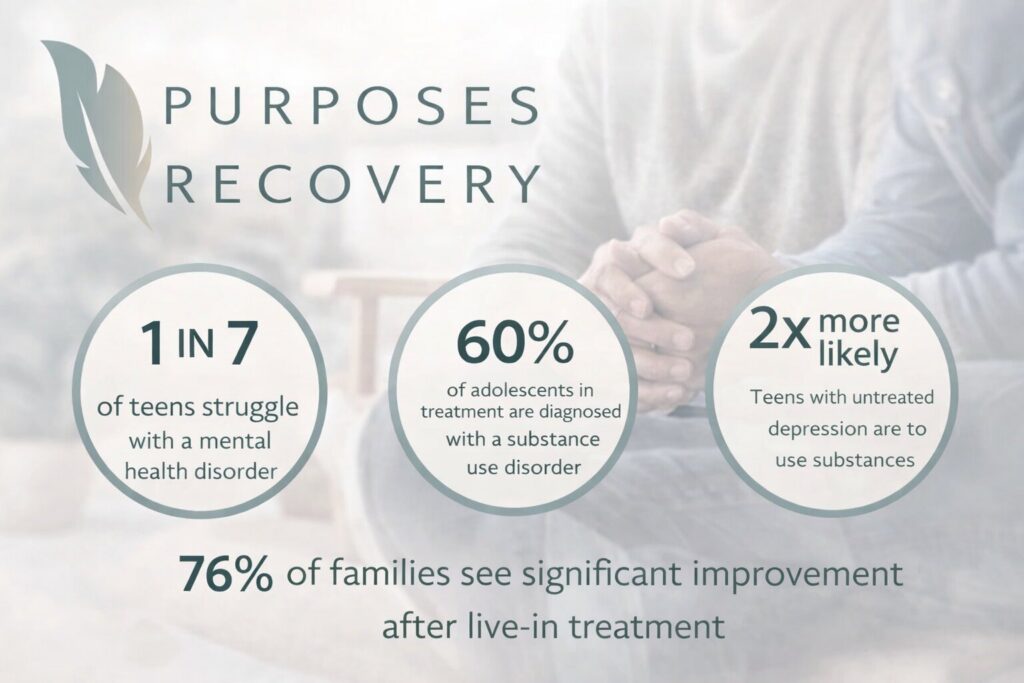
When Mental Health and Substance Use Intersect
Many parents initially believe their child’s struggle is purely about substances.
But over time, they begin noticing deeper patterns.
Anxiety that never settles.
Depression that drains motivation.
Impulsive decisions that seem disconnected from consequences.
When mental health and substance use collide, the situation becomes more complex than simply stopping a behavior.
Often substances become a way for someone to cope with emotions they don’t know how to handle.
Treatment helps people understand those emotional patterns and develop healthier ways to manage them.
For many young adults, recognizing those underlying struggles becomes a turning point.
The Moment Parents Realize They Can’t Fix It Alone
Parents are wired to protect their children.
So when something threatens their child’s well-being, their instinct is to fix it.
But addiction often doesn’t respond to protection alone.
Families try conversations.
They try ultimatums.
They try support and consequences.
Eventually many parents reach a painful realization:
We can’t solve this ourselves.
That moment is heartbreaking.
But it’s also an important step forward.
Because recognizing the limits of what one family can manage often opens the door to real help.
Why Stepping Away From Home Can Help
Sometimes the most healing thing for a young adult is stepping outside the environment where patterns have been repeating.
Inside a structured treatment environment, something different happens.
The daily rhythm becomes predictable.
Therapy helps individuals understand the emotional roots of their behavior.
Peers who share similar struggles create a sense of connection that many young adults haven’t felt before.
Without the distractions and triggers of everyday life, people can begin focusing entirely on recovery.
For many young adults, it’s the first time they’ve experienced that kind of stability.
The Shift Parents Often See
Parents sometimes expect dramatic transformation.
But recovery usually begins with smaller changes.
More honest conversations.
More emotional awareness.
More willingness to take responsibility.
These changes might seem subtle at first.
But over time, they add up to something meaningful.
Young adults begin developing the tools they need to navigate stress, relationships, and life challenges without relying on substances.
For many families, this process becomes the beginning of rebuilding trust.
The Courage It Takes to Ask for Help
For parents, seeking treatment for a child can feel like admitting defeat.
But in reality, it’s often the opposite.
It means you’re willing to set aside pride, fear, and uncertainty in order to give your child the best possible chance at recovery.
Love doesn’t disappear when treatment begins.
It becomes stronger.
Because it recognizes that protecting your child’s future sometimes requires bringing in the support you can’t provide alone.
FAQ
How do parents know when it’s time to consider treatment?
Parents often begin considering treatment when substance use continues despite repeated efforts to address it at home. Warning signs can include escalating behavior, worsening mental health, or repeated relapses.
When the situation feels beyond what the family can manage safely, professional support may be needed.
Does seeking treatment mean parents have failed?
No. Seeking treatment is often one of the most responsible decisions a parent can make. It shows a commitment to giving a child access to the resources needed for real recovery.
Will families still be part of the recovery process?
Yes. Family involvement is often an important part of healing. Many treatment environments include family support, communication, and education so parents can better understand their child’s recovery journey.
How long does treatment usually last?
Treatment length varies depending on each individual’s needs. Some people benefit from shorter stays focused on stabilization, while others remain longer to build deeper coping skills and emotional awareness.
Can treatment really change the direction of a young adult’s life?
For many young adults, treatment becomes a turning point.
With structure, therapy, and support, individuals often begin developing healthier coping skills, rebuilding confidence, and creating new goals for their future.
Recovery takes time—but meaningful change is possible.
If you’re worried about your child and wondering what the next step might look like, support is available. Call (888)482-0717 or visit our live-in treatment and round-the-clock support to learn more about our residential treatment program services in Los Angeles, CA.