
There’s a stage in recovery that hardly anyone talks about.
It doesn’t show up in the first month.
It doesn’t show up in the dramatic stories people tell at meetings.
It shows up later—when life is technically “better.”
You’re stable.
You’re functioning.
You’re doing the right things.
But inside, something feels… disconnected.
When I first entered structured daytime care, I thought recovery was about surviving the early chaos.
I didn’t realize the real test would come after life calmed down.
The Phase No One Warns You About
Early recovery is intense.
Everything feels urgent. You’re rebuilding routines, learning coping tools, repairing relationships, and trying to stay steady day by day.
There’s a sense of momentum.
Every week feels like progress.
But eventually, the crisis fades.
The routines become normal.
And that’s when a strange phase can appear—the phase where nothing is dramatically wrong, but nothing feels deeply right either.
You’re sober.
You’re functioning.
But life feels flat.
For many long-term alumni, this is the part that catches them off guard.
When Stability Starts Feeling Like Stagnation
Most recovery conversations focus on crisis or relapse.
But the middle stretch—the quiet years after treatment—can feel strangely complicated.
Life becomes predictable.
Work stabilizes.
Relationships calm down.
Daily routines settle into place.
On paper, everything looks healthy.
But inside, you might feel like you’re moving through life on autopilot.
You wake up, go through the motions, check off responsibilities, and fall asleep wondering why everything feels emotionally muted.
Many people describe it like this:
“Nothing is wrong, but nothing feels alive either.”
That feeling can be unsettling, especially when you expected sobriety to bring constant clarity and motivation.
The Myth That Recovery Should Feel Good All the Time
One of the most common misunderstandings about recovery is the idea that once substances are gone, life will naturally feel fulfilling.
In reality, sobriety clears space.
It removes chaos.
It removes emotional numbing.
It removes destructive patterns.
But it also removes distractions.
And once the distractions are gone, many people are left facing deeper questions they postponed for years.
Questions like:
Who am I without the chaos?
What actually gives my life meaning?
What do I want now that survival isn’t the goal?
Those questions can feel intimidating.
Sometimes they create a sense of emptiness before they lead to growth.
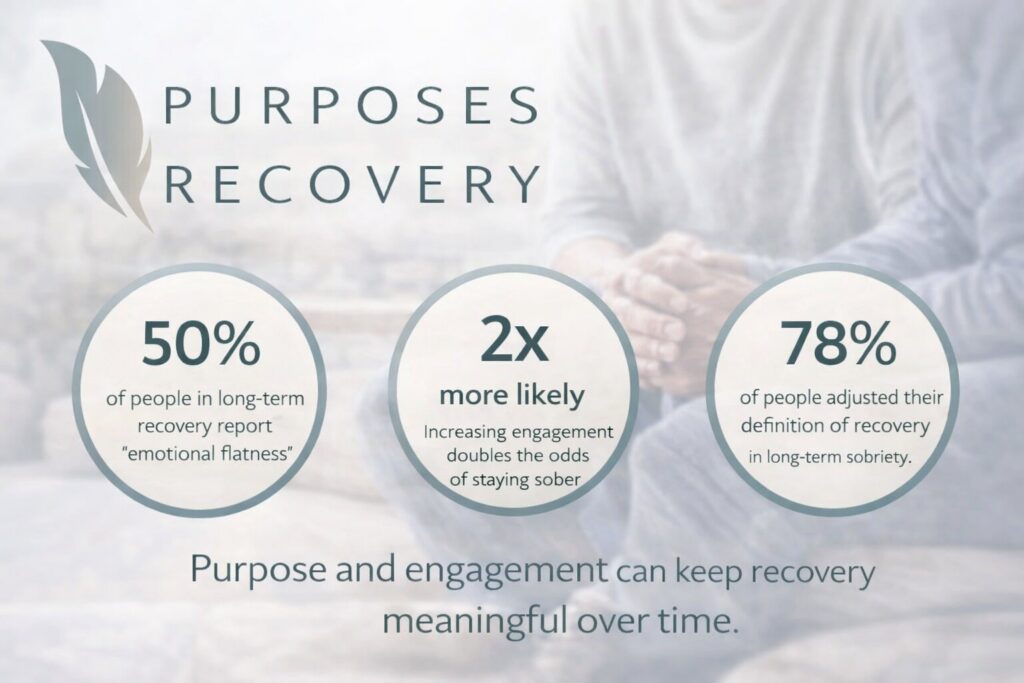
The Hidden Risk of Emotional Flatness
The quiet phase of recovery isn’t dangerous because things are falling apart.
It’s dangerous because nothing feels urgent.
You stop checking in as deeply with yourself.
Meetings feel routine instead of meaningful.
Daily life becomes predictable.
And slowly, emotional disconnection can creep in.
That disconnection sometimes leads to a dangerous thought pattern.
The brain begins editing the past.
It remembers excitement but forgets the damage.
It remembers intensity but forgets the consequences.
That’s why this stage requires a different kind of awareness than early recovery.
You’re not fighting chaos anymore.
You’re protecting purpose.
What Early Structure Taught Me That I Needed Later
When I look back on my early treatment experience, I realize something important.
The value of structured support wasn’t just about helping me get sober.
It was about teaching skills that would matter years later.
At the time, some of those lessons felt repetitive.
Learning to identify emotions.
Learning how to regulate stress.
Learning how to recognize avoidance patterns.
But those tools became essential when the emotional fog appeared later.
Because when life started feeling flat, I didn’t panic.
I knew how to step back and ask honest questions about what was happening internally.
The foundation built during early recovery made the middle phase survivable.
The Middle Is Where Real Life Begins
Someone once told me something that didn’t make sense at first.
They said:
“The beginning of recovery is about stopping destruction. The middle is about building a life.”
That second part takes longer.
And it’s often less dramatic.
Building a meaningful life involves experimenting with things that may or may not work.
Trying new interests.
Repairing relationships slowly.
Exploring identity outside of addiction.
It’s messy and gradual.
But it’s also where recovery becomes real.
Because sobriety stops being the goal.
Instead, it becomes the foundation.
The Moment I Realized I Wasn’t Failing
About a year into recovery, I remember telling someone that I felt stuck.
I wasn’t miserable.
But I wasn’t inspired either.
I expected them to tell me I was doing something wrong.
Instead, they smiled and said something simple:
“You’re in the middle now.”
That sentence stuck with me.
Recovery isn’t a straight climb toward happiness.
There’s a long stretch where life slows down.
Where things feel quiet.
Where identity and purpose take time to rebuild.
Once I understood that, the pressure disappeared.
I stopped trying to force excitement.
I focused on building something steady instead.
How I Started Moving Forward Again
The shift didn’t come from one big breakthrough.
It came from small, intentional changes.
I started reconnecting with people who understood recovery.
I explored activities that had nothing to do with addiction or treatment.
I stopped measuring my life against dramatic expectations.
Instead, I focused on consistency.
Showing up for relationships.
Taking care of my mental health.
Staying curious about what my life could become.
Slowly, the emotional fog lifted.
Not all at once.
But enough that life started feeling meaningful again.
The Phase That Builds Real Recovery
The quiet phase of recovery is uncomfortable.
But it’s also where the deepest growth happens.
Because once survival mode ends, you begin building something more durable.
A life that isn’t driven by crisis.
A life built on purpose, connection, and emotional honesty.
And that takes time.
Sometimes a lot of time.
But it’s worth it.
Because eventually you look around and realize something surprising.
Life isn’t just stable anymore.
It’s yours.
FAQ
Is it normal to feel disconnected after long-term sobriety?
Yes. Many people in long-term recovery experience periods where life feels emotionally flat or stagnant. This phase is often part of rebuilding identity and purpose after the chaos of addiction.
Why does recovery sometimes feel harder after the crisis stage?
During early recovery, urgency and survival drive motivation. Once life stabilizes, deeper emotional and identity questions begin to surface, which can feel confusing or overwhelming.
Can this phase increase the risk of relapse?
It can if emotional disconnection goes unrecognized. When life feels dull, the brain may romanticize past substance use. Staying connected to support systems helps protect against this.
What helps people move through the “middle phase” of recovery?
Common strategies include reconnecting with recovery communities, exploring meaningful goals, strengthening relationships, and continuing personal growth work.
Recovery often evolves over time rather than remaining static.
Does recovery eventually start feeling meaningful again?
For many people, yes.
As individuals rebuild identity, relationships, and purpose, recovery often shifts from something they manage into something that genuinely enriches their lives.
But reaching that point usually requires patience and ongoing self-reflection.
If you’re navigating recovery and feeling stuck or disconnected, it doesn’t mean something is wrong with you. Sometimes it means you’re entering the deeper phase of healing. Call (888)482-0717 or visit our structured daytime care options to learn more about our partial hospitalization program services in Los Angeles, CA.