
Knowing you need help and actually stepping into treatment are two very different moments.
The first one happens quietly.
Maybe late at night. Maybe after a hard conversation. Maybe after realizing you’ve tried everything you can think of on your own.
You reach a point where something inside you says:
This isn’t working anymore.
But then another question shows up right behind it:
What actually happens if I go?
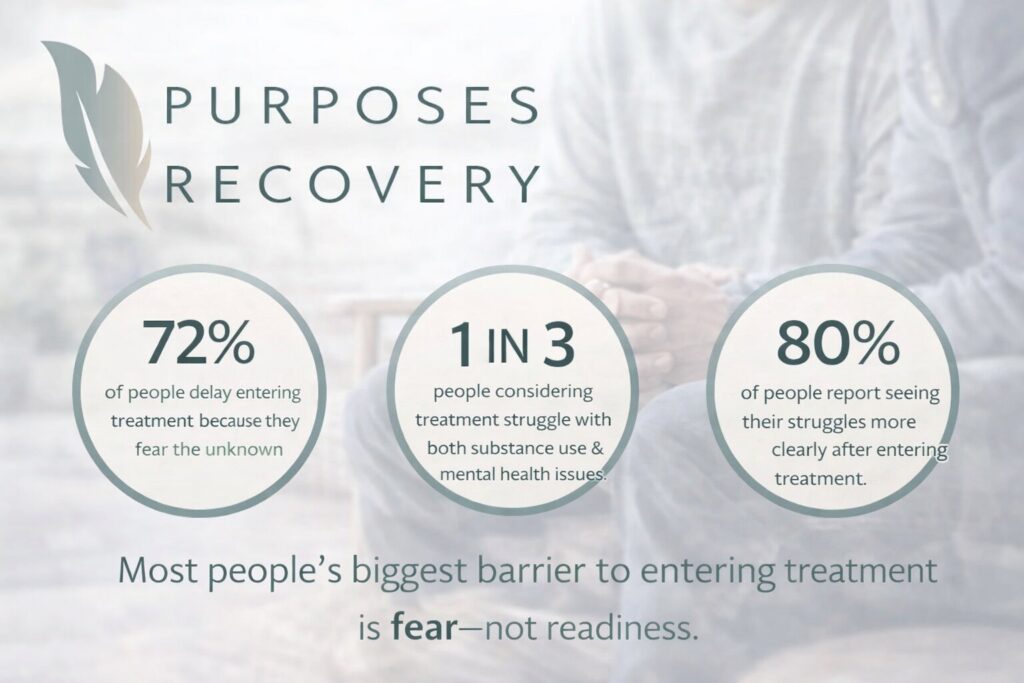
For many people considering live-in treatment and round-the-clock support, the biggest fear isn’t recovery.
It’s the unknown.
The Moment Before Someone Asks for Help
People rarely arrive at treatment suddenly.
It usually comes after months—or years—of trying to hold things together.
You tell yourself you can manage it.
You promise you’ll cut back.
You convince yourself tomorrow will be different.
But over time, the effort of holding everything together becomes exhausting.
Relationships start feeling strained.
Sleep becomes unpredictable.
The same problems keep returning.
By the time someone starts researching treatment, they’re often already carrying a deep awareness that something has to change.
What they don’t know yet is what healing will actually look like.
The Fear of Walking Through the Door
Almost everyone has the same fear before entering treatment.
What if I don’t belong there?
People imagine they’ll be surrounded by strangers with completely different lives.
They imagine judgment.
They imagine losing control of their independence.
They imagine being forced into something uncomfortable.
But when people finally arrive, one realization tends to happen quickly.
Everyone there is human.
Different backgrounds.
Different stories.
But the same moment of honesty that brought them there.
The moment when someone finally admits they can’t keep living the way they’ve been living.
That shared understanding often breaks down the fear faster than anything else.
The First Few Days Can Feel Strange
One of the biggest surprises people experience in treatment is how different the pace of life feels.
Outside treatment, life is full of constant stimulation.
Phones buzzing.
Work demands.
Endless responsibilities.
When someone enters a supportive treatment environment, that pace changes.
The days become structured.
The distractions decrease.
And something interesting happens when the noise fades.
Feelings start showing up.
At first, that can feel uncomfortable.
Emotions that were pushed aside for years may surface.
But this is also where the healing process begins.
Because change doesn’t start with fixing everything.
It starts with understanding what has actually been happening inside your life.
The Conversations Most People Have Been Avoiding
One thing people often discover quickly is that treatment isn’t about lectures.
It’s about conversations.
Real ones.
Conversations about stress, trauma, identity, and the ways people learned to cope when life felt overwhelming.
Sometimes those coping patterns involve substances.
Sometimes they involve emotional shutdown.
Sometimes they involve pushing yourself far beyond healthy limits.
For many people, treatment becomes the first place where they are able to talk openly about what has been happening beneath the surface.
Not in a way that assigns blame.
But in a way that creates understanding.
Why Structure Helps the Mind Slow Down
A structured environment can feel unfamiliar at first.
But structure has a powerful effect on the nervous system.
When the day follows a predictable rhythm, the brain begins to relax.
Therapy sessions create space for reflection.
Group discussions provide connection.
Time for rest allows the body to reset.
People often notice changes within the first few weeks.
Sleep becomes more consistent.
Anxiety begins to soften.
Thoughts become clearer.
These changes don’t happen because treatment is magical.
They happen because the brain finally has space to recover.
The Moment Hope Starts Appearing Again
At some point, something subtle often shifts.
It doesn’t happen all at once.
Maybe someone shares a story in group therapy that feels familiar.
Maybe a conversation with a therapist reveals a pattern you never noticed before.
Maybe you simply realize you haven’t felt this calm in years.
That moment can be surprising.
Because for the first time in a long time, the future doesn’t feel completely overwhelming.
Hope doesn’t arrive like fireworks.
It arrives quietly.
But once it shows up, it tends to grow.
Recovery Isn’t About Becoming Someone New
One of the biggest misconceptions about treatment is the belief that it changes who someone is.
In reality, recovery often does the opposite.
It helps people reconnect with parts of themselves that got buried under stress, addiction, or emotional pain.
Creativity comes back.
Curiosity returns.
Relationships begin to feel genuine again.
People often discover they didn’t need to become a different person.
They needed the space to become themselves again.
Why Asking for Help Is an Act of Strength
Many people believe entering treatment means losing control.
But in reality, it’s often the first moment someone takes control of their life again.
Instead of reacting to problems after they happen, they choose to face them directly.
Instead of hiding from pain, they begin understanding it.
That decision requires courage.
But it also creates the possibility for something new.
Not perfection.
Just progress.
And progress is often the beginning of a very different life.
FAQ
How do people know when it’s time to consider treatment?
Most people begin considering treatment when they feel stuck in patterns they can’t change on their own. This might involve substance use, mental health struggles, or situations where both are affecting daily life. The feeling that “something has to change” is often the first signal.
Is it normal to feel scared before entering treatment?
Yes. Almost everyone feels nervous or uncertain before starting treatment. Fear of the unknown is natural, especially when making a major life decision. Many people say those fears ease quickly once they settle into the environment.
What happens during the first days in treatment?
The first days usually focus on helping individuals adjust to their environment, meet the clinical team, and begin sharing their story at their own pace. There is no expectation to solve everything immediately. Healing is a gradual process.
Will I lose contact with my family or loved ones?
In most treatment settings, families remain an important part of the healing process. Communication and family involvement are often encouraged when appropriate.
Can treatment really help someone rebuild their life?
Yes. Many people use treatment as the starting point for rebuilding stability, emotional health, and meaningful relationships.
Recovery doesn’t happen overnight, but with the right support, meaningful change is possible.
If you’re thinking about getting help and wondering what the next step might look like, support is available. Call (888)482-0717 or visit our live-in treatment and round-the-clock support to learn more about our residential treatment program services in Los Angeles, CA.