
When your child is in emotional pain, something changes inside you as a parent.
You may feel it immediately—a quiet fear that something is very wrong. Or it may build slowly as you watch your child struggle with anxiety, depression, overwhelming emotions, or behavior that feels unfamiliar.
In moments like this, many parents feel like they’re trying to help someone they love while standing in the middle of a storm.
For families navigating these situations, one option that can provide stability is structured daytime care, where young adults receive consistent daily support while still returning home each evening.
This kind of support doesn’t erase the fear parents feel—but it can provide direction when everything else feels uncertain.
When a Mental Health Crisis Changes the Family Overnight
Parents often say the hardest part of a mental health crisis is how quickly things can change.
A child who once seemed confident may suddenly feel overwhelmed by everyday responsibilities.
You might notice:
- Withdrawal from friends or family
- Intense mood swings
- Difficulty sleeping or leaving their room
- Panic attacks or emotional shutdown
- Sudden behavioral changes that feel out of character
Sometimes these changes appear gradually. Other times they seem to happen all at once.
And when they do, parents often feel a deep sense of urgency mixed with confusion.
You want to help. But you may not know what kind of help will actually make things better.
The Emotional Weight Parents Carry During a Crisis
When a child is struggling, parents often carry invisible questions that no one else sees.
Did I miss the warning signs?
Did I say the wrong thing?
Am I making this worse somehow?
These questions are incredibly common. And they can be incredibly painful.
But mental health crises rarely come from one single cause. They are shaped by many factors—biological, emotional, environmental, and social.
What matters most now isn’t looking backward.
What matters is creating the right support moving forward.
Sometimes the most powerful thing a parent can do is simply recognize that their child needs more help than they can provide alone.
When Weekly Therapy Isn’t Enough Support
For many young adults, traditional therapy works well.
But during periods of crisis, weekly sessions may not provide enough structure or stability.
Imagine trying to rebuild emotional balance while only receiving guidance once every seven days.
Between sessions, your child may face overwhelming feelings without enough support.
That’s why many clinicians recommend more consistent care during difficult periods.
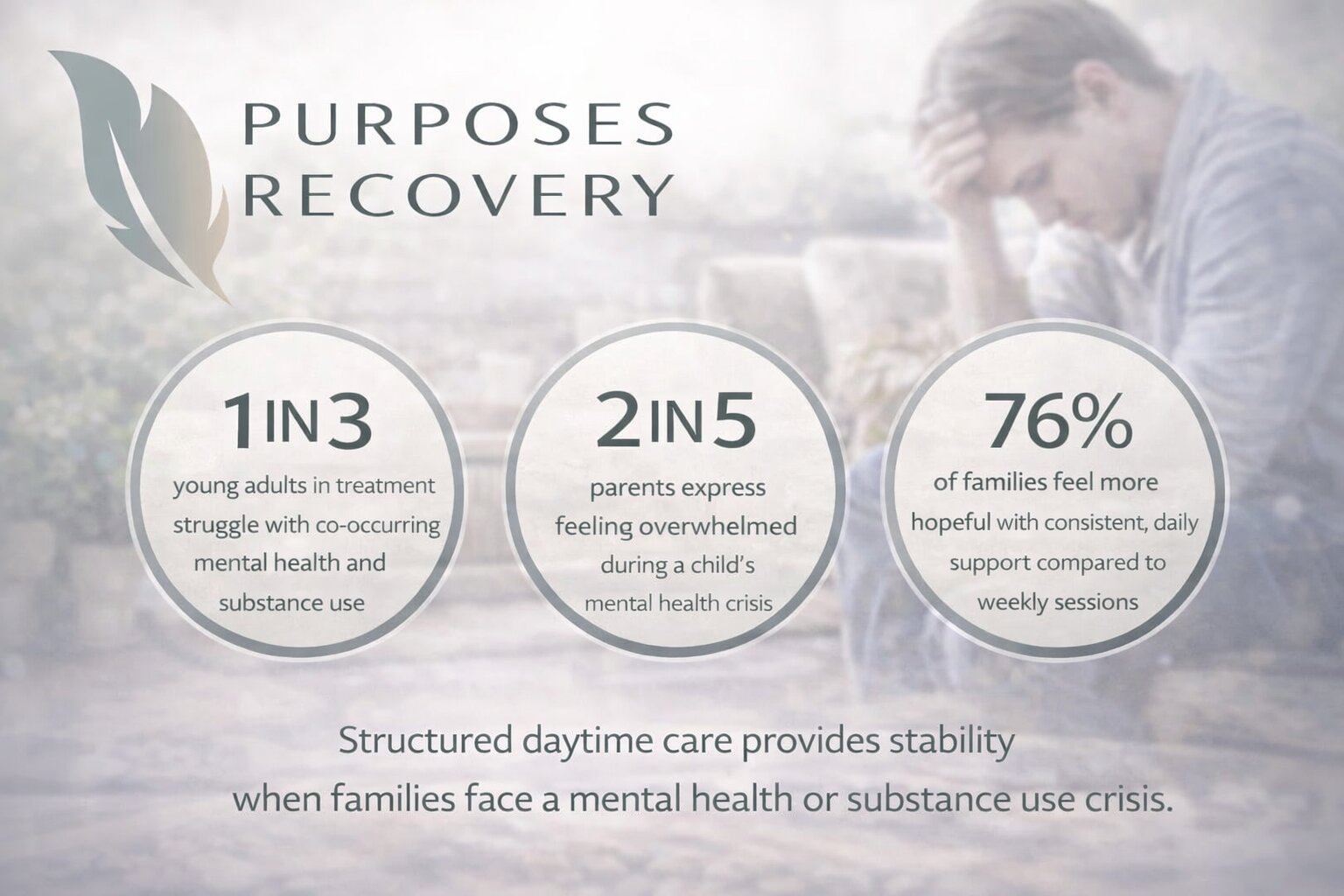
With structured daytime care, individuals receive multiple hours of therapeutic support each day during the week. This creates a steady rhythm of guidance, reflection, and skill-building.
Instead of navigating emotional challenges alone, they are surrounded by professionals who understand how to help stabilize difficult moments.
For many families, this consistency can feel like the first real sense of relief.
Why Returning Home Each Evening Can Help Recovery
When parents first hear about intensive mental health support, they sometimes imagine separation from their child.
But structured daytime care often works differently.
Young adults participate in therapy and clinical support during the day, then return home in the evening.
This approach can offer important benefits:
Connection to family remains intact.
Parents stay involved in the healing process rather than feeling shut out.
Skills can be practiced in real life.
Young adults can apply what they’re learning immediately within their home environment.
Independence continues to grow.
Rather than stepping away from life completely, they learn to manage emotions while staying connected to daily routines.
For many families, this balance between structure and home life feels supportive rather than isolating.
What Healing Often Looks Like in the Early Stages
One of the hardest parts of recovery is that progress rarely looks dramatic at first.
Parents sometimes hope for immediate transformation.
In reality, healing usually begins with small changes:
A child who starts opening up in conversation.
A day where anxiety feels slightly more manageable.
A moment where they pause before reacting emotionally.
These small shifts may not seem significant at first.
But over time, they build something powerful: stability.
Recovery isn’t usually a sudden breakthrough.
It’s often a slow rebuilding of safety, confidence, and emotional regulation.
When Mental Health and Substance Use Intersect
Some families discover that emotional struggles are connected with substance use.
Young adults sometimes turn to substances as a way to manage overwhelming feelings, social pressure, or emotional pain.
When mental health and substance use collide, support often needs to address both experiences at the same time.
This doesn’t mean your child is “broken” or beyond help.
It means they may need guidance from professionals who understand how these challenges interact.
With the right care, many young adults learn healthier ways to manage distress and reconnect with their lives.
How Parents Can Support a Child During Treatment
Parents often feel unsure how involved they should be during their child’s healing process.
The most helpful approach usually includes a balance of support and patience.
Some ways parents can help include:
Listening without trying to immediately fix the problem.
Sometimes your child simply needs to feel heard.
Encouraging openness about emotions.
Validation can create safety during vulnerable moments.
Learning about mental health alongside your child.
Understanding what they are experiencing helps families move forward together.
Taking care of your own emotional health.
Supporting someone in crisis is exhausting. Parents need support too.
Remember: you do not have to carry the entire burden alone.
Professional support exists to guide both individuals and families through these moments.
The Truth Many Parents Need to Hear
During a crisis, parents often feel like everything depends on them.
But healing is not something one person carries alone.
Recovery is a process built through collaboration:
Clinicians providing guidance.
Families offering support.
Young adults learning new ways to navigate emotional challenges.
Even when things feel overwhelming, there are paths forward.
And sometimes the most powerful step is simply reaching out for help.
As one parent once shared after their child began healing:
“The crisis felt endless at the time. But looking back, it was the moment we finally found the right support.”
FAQ
How can parents tell if their child may need more structured support?
Parents often notice warning signs such as extreme mood swings, withdrawal from daily life, persistent anxiety, or emotional distress that interferes with normal functioning.
If these challenges continue to escalate or feel unmanageable, it may be time to explore more consistent support.
Is it normal for parents to feel overwhelmed during a mental health crisis?
Yes. Many parents describe feeling frightened, confused, or unsure about the right next step.
Mental health emergencies affect the entire family, and it’s natural to feel uncertain while trying to help your child.
Seeking professional guidance can provide clarity during these moments.
Can families stay involved in the healing process?
In most cases, families play an important role in recovery.
Treatment teams often work with parents to help them understand their child’s challenges, improve communication, and strengthen family support systems.
What if my child doesn’t want help?
Resistance is common, especially for young adults who may feel embarrassed, scared, or misunderstood.
Approaching the conversation with empathy rather than pressure can make a difference. Let your child know your concern comes from love and that support is available when they are ready.
How long does structured support usually last?
The length of care varies depending on each individual’s needs and progress.
Some young adults benefit from several weeks of consistent support, while others may need longer periods of guidance before transitioning to less intensive care.
What should parents do if they feel lost right now?
The most important step is reaching out.
Mental health professionals can help families assess the situation, understand available options, and determine the most appropriate level of support for their child.
You do not have to figure this out alone.
When your child is struggling, it’s normal to feel frightened and unsure where to turn. Compassionate support can help families navigate these difficult moments together. Call (888)482-0717 or visit our structured daytime care options to learn more about our partial hospitalization program services in Los Angeles, CA.