
There’s a moment a lot of people never talk about out loud. The drink finally takes the edge off. Your shoulders loosen. Your mind quiets down for the first time all day.
Then the next morning hits.
Your heart races. Your thoughts spiral. Small worries suddenly feel enormous. And somewhere in the middle of it, you wonder: Why is this happening to me?
For many people, this cycle is deeply connected to support for co-occurring mental health and substance use struggles. The relief feels real in the moment. But the crash afterward can feel even more intense.
Alcohol Can Temporarily “Mute” Anxiety — But Only for a While
Alcohol affects chemicals in the brain that help regulate stress and emotion. At first, it can create a sense of calm or numbness. That’s why so many people reach for it after an overwhelming day.
But the brain tries to rebalance itself while alcohol is in your system. As the alcohol wears off, your nervous system can swing hard in the opposite direction.
That’s why the next day may bring:
- Racing thoughts
- Panic-like feelings
- Restlessness
- Irritability
- Trouble sleeping
- A heavy sense of dread
It can feel like your anxiety multiplied overnight.
In reality, your brain is trying to recover from the chemical slowdown alcohol created.
The Relief Is Real — And So Is the Rebound
This part matters.
People sometimes blame themselves for drinking to cope. But many aren’t trying to “party” or lose control. They’re trying to feel normal for a few hours. They’re trying to turn the volume down on a nervous system that already feels overloaded.
The problem is that alcohol often borrows relief from tomorrow.
Like using a credit card for emotional exhaustion, the calm comes first. The interest shows up later.
That rebound anxiety can become so uncomfortable that drinking again starts to feel like the only way to stop it. That’s how the cycle quietly tightens over time.
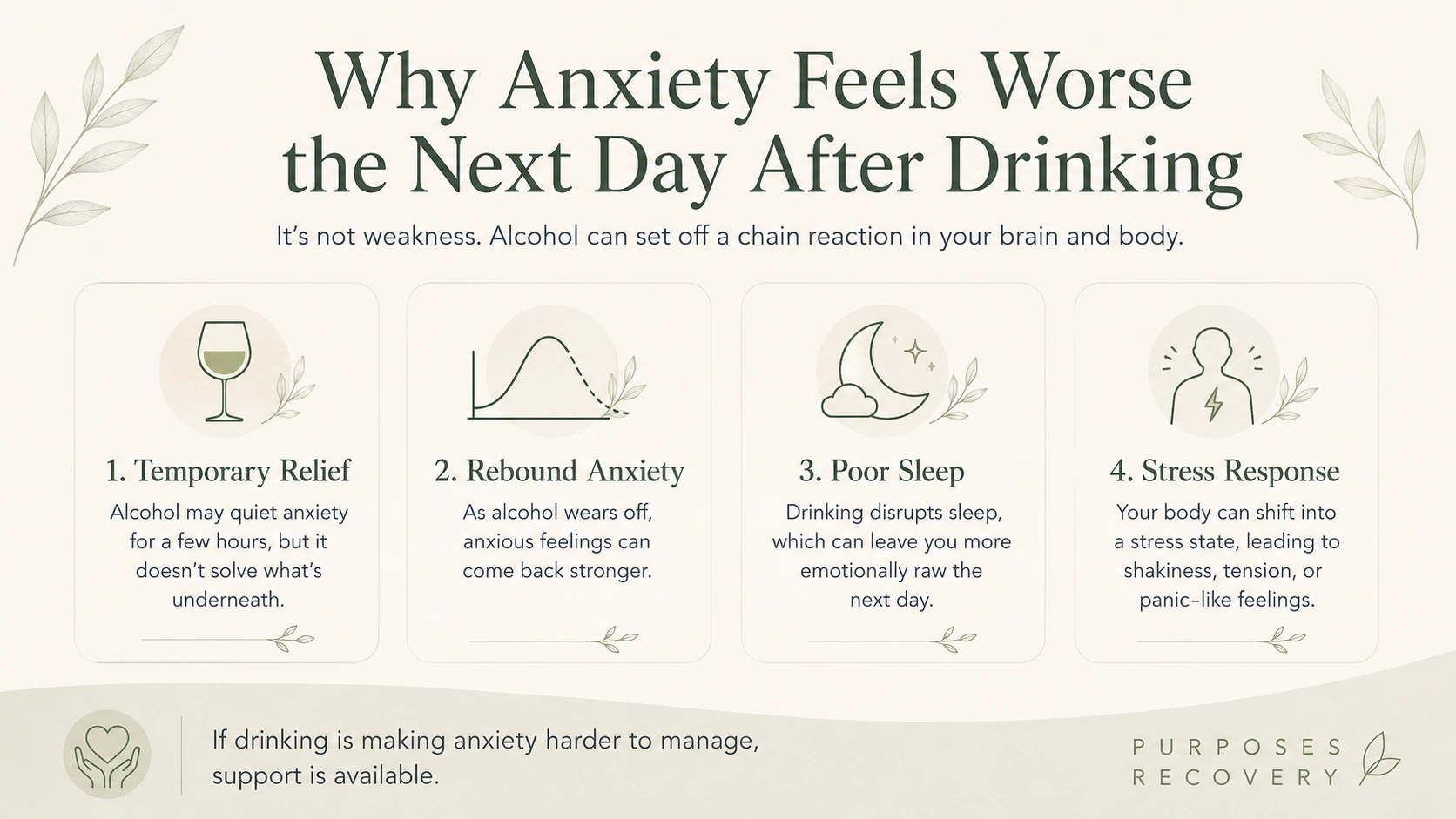
Why the Anxiety Feels So Much Worse the Next Day
There are a few reasons this happens.
Sleep Gets Disrupted
Alcohol can make people fall asleep faster, but it usually lowers sleep quality. Your brain misses deeper restorative sleep cycles, which can make emotions harder to regulate the next day.
Even one night of poor sleep can amplify anxious thinking.
Your Body Goes Into Stress Mode
As alcohol leaves the system, the body can release stress hormones that increase shakiness, tension, sweating, and rapid heartbeat.
For someone already prone to anxiety, those physical sensations can trigger even more fear.
Your Brain Starts Depending on the Pattern
Over time, the brain can begin associating alcohol with relief. That can make sober moments feel sharper, louder, and harder to tolerate emotionally.
This is one reason anxiety and alcohol often become closely linked without someone realizing how gradually it happened.
Sometimes It Stops Feeling Like “Just Stress”
One of the hardest parts of this cycle is how easy it is to minimize.
People say things like:
- “I just need to cut back.”
- “Work has been intense lately.”
- “I’m only drinking at night.”
- “Everyone drinks to relax.”
But if the anxiety is worsening, if mornings feel emotionally unbearable, or if alcohol has started feeling less optional and more necessary, it may be a sign that something deeper is happening.
That doesn’t mean someone is broken.
It may mean their nervous system is overwhelmed and needs real support — not more pressure to “handle it better.”
What Helps Break the Cycle
For many people, healing starts with understanding that they’re not weak for struggling with this.
They’re exhausted.
And exhaustion changes how people cope.
Support can look different for everyone. Some people benefit from therapy focused on anxiety. Others need help addressing both mental health symptoms and substance use together, especially when the two have become tangled together emotionally and physically.
That’s often where treatment focused on when mental health and substance use collide becomes important. Addressing only the drinking without addressing the anxiety underneath it can leave people feeling stuck in the same loop.
You Don’t Have to Keep White-Knuckling Through It
Parents often notice this cycle before their loved one does.
They see the emotional crash after drinking. The panic. The irritability. The withdrawal. The exhaustion that keeps getting harder to hide.
And they wonder whether this is “serious enough” to ask for help.
If you’re reading this because you’re worried about someone you love — or because you recognize yourself in these mornings — you are not overreacting. Something real is happening, and it deserves care, not shame.
Call 888-482-0717 or explore our dual diagnosis treatment services to learn more about support for people struggling with anxiety, alcohol use, and the emotional weight underneath both.